.webp)

Prabin Bhusal
Automotive Lead
toc Table of Contents expand_more
If you were planning to buy an electric vehicle (EV) in Nepal this year, we have some news for you — and unfortunately, it is not good news.
The government of Nepal has just announced the new budget for fiscal year 2082/83, and this budget has brought very big changes for electric vehicles. The new tax rules came into effect from Friday night itself, and from now onwards, buying an EV in Nepal is going to cost you significantly more money than before.
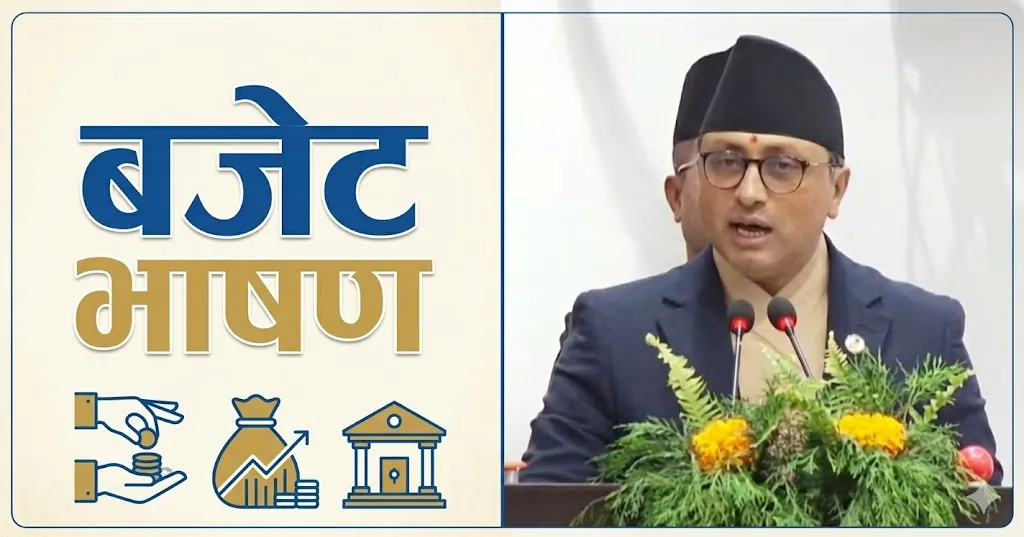
Many Nepali people had been slowly turning towards electric vehicles in recent years. Petrol and diesel prices keep going up, electricity in Nepal is relatively cheap, and EVs are better for the environment. It all made sense. Dealers were happy, buyers were excited, and the EV market in Nepal was growing nicely.
But this new budget has changed everything — at least for now.
In this article, we will explain everything clearly: what exactly changed in the new budget, how much tax you will now have to pay on EVs, what it means for common buyers like you, and what we at MotorMandu think about all of this.
First, Let's Understand How EV Tax Worked Before
Before we talk about the new system, let us quickly explain how things worked before.
Until now, electric vehicles in Nepal were taxed based on their motor power — measured in kilowatts (kW). The idea was simple: if your EV has a more powerful motor, you pay more tax. If it has a smaller, less powerful motor, you pay less tax.
Under the old system, six different tax brackets were created based on kW capacity. The lowest category — vehicles with the smallest motors — used to pay:
- 10% customs duty (Bhansaar)
- 13% VAT
- 5% road charge
That was actually quite reasonable. And for the highest category (above 300 kW), the taxes were much higher, but those were mostly luxury vehicles anyway.
Overall, the old system had been in place for several years and was working reasonably well. It had helped make EVs more popular among middle-class Nepali buyers.
What Has the New Budget Changed?
The new budget has made two very major changes:
Change 1: Tax is no longer based on kW — it is now based on import price (value)
Instead of looking at how powerful the motor is, the government will now look at how much the vehicle costs at import. Six price brackets have been created based on import value, ranging from under NPR 20 lakh to above NPR 50 lakh.
Change 2: Excise Duty (Antahshulka) has been removed — but replaced by a new charge called "Clean Infrastructure Investment Levy"
This is the most important and most controversial change. The government has abolished excise duty on EVs and introduced a brand new tax called the "Swachha Purwadhar Lagani Shulka" (Clean Infrastructure Investment Levy). This sounds very positive — like the government is charging you to build clean energy infrastructure. But when you look at the actual rates, you will see that this new charge is often higher — sometimes much higher — than the old excise duty it replaced.
The New EV Tax Structure: Price Bracket by Price Bracket
Here is the complete new tax structure for electric vehicles in Nepal, based on import value:
| Import Value (NPR) | Customs Duty | Clean Infra Levy | VAT | Road Tax | Approx. Total Tax |
|---|---|---|---|---|---|
| Under 20 lakh | 20% | 2.5% | 13% | 5% | ~40% |
| 20 lakh – 30 lakh | 20% | 20% | 13% | 5% | ~58% |
| 30 lakh – 40 lakh | 20% | 35% | 13% | 5% | ~73% |
| 40 lakh – 50 lakh | 20% | 90% | 13% | 5% | ~128% |
| Above 50 lakh | 20% | 130% | 13% | 5% | ~168% |
Look at that jump between the 30–40 lakh bracket and the 40–50 lakh bracket. The Clean Infrastructure Levy alone goes from 35% to 90% — that is a massive increase for what is basically a mid-range vehicle by Nepal's standards.
And for vehicles above 50 lakh, when you add everything together, you are paying taxes of nearly 150–168% on top of the import price. Before this budget, the maximum total tax was around 130%. So even at the top end, it has gone up.
Real Life Example: How Much Will You Actually Pay?
Let us make this very practical. Suppose you are looking at a mid-range electric SUV that has an import value of NPR 30 lakh. Under the new budget, here is how much tax you will pay:
- Customs Duty (20% of 30 lakh) = NPR 6,00,000
- Clean Infrastructure Levy (35% of 30 lakh) = NPR 10,50,000
- VAT (13% of 30 lakh) = NPR 3,90,000
- Road Tax (5% of 30 lakh) = NPR 1,50,000
Total Tax = NPR 21,90,000
Estimated On-Road Price = NPR 51,90,000+
That means a vehicle that costs NPR 30 lakh to import will end up costing you over NPR 50 lakh by the time it reaches you. And this is before dealer margins, registration fees, and insurance.
Now let us take a more affordable example. A small EV with import value of NPR 18 lakh (under 20 lakh bracket):
- Customs Duty (20%) = NPR 3,60,000
- Clean Infrastructure Levy (2.5%) = NPR 45,000
- VAT (13%) = NPR 2,34,000
- Road Tax (5%) = NPR 90,000
Total Tax = NPR 7,29,000
Estimated On-Road Price = ~NPR 25,29,000+
This bracket is actually not too bad. The government seems to have intentionally kept taxes lower for cheaper vehicles. But the problem is — most popular EVs in Nepal, including the ones that common middle-class buyers are interested in, fall in the NPR 30–50 lakh range. And that is exactly where the taxes have jumped the most dramatically.
Which Popular EVs Are Affected the Most?
You might be wondering — which specific EVs in Nepal fall in which bracket? While exact import values vary by brand and model year, here is a general idea based on current market pricing:
Under NPR 20 lakh import value (Lowest Tax Bracket) This category is very limited. Very few mainstream EVs fall here. Maybe some smaller two or three-wheeler based models, but most proper four-wheel EVs cost more to import.
NPR 20–40 lakh import value (Moderate Tax Bracket) Some entry-level EV sedans and smaller hatchback-style EVs might fall here. Tata Nexon EV, for example, has historically been in this range. However, with the new tax structure, even these vehicles will see noticeable price increases.
NPR 40–50 lakh import value (High Tax Bracket — 90% Levy) This is where it gets really painful. Many mid-range popular EVs — including some MG and BYD models that have become popular in Kathmandu — fall in this range. A 90% Clean Infrastructure Levy on top of all other taxes means these vehicles become incredibly expensive for Nepali buyers.
Above NPR 50 lakh import value (Maximum Tax Bracket — 130% Levy) Premium EVs, larger SUVs, Tesla models, higher-end BYD and Hyundai EVs. These were already expensive, but now they will be priced completely out of reach for almost everyone except very wealthy buyers.
What Is the Government Saying?
Officials from the Department of Customs have come out to defend this new tax structure. Their main argument is that this system is "progressive" — meaning poorer people who buy cheaper cars pay less, and richer people who buy expensive cars pay more.
"For vehicles under NPR 20 lakh, the total tax burden is around 40%, which is not that high," one customs official explained. "The higher rates only apply to premium vehicles that wealthy people buy."
They also pointed out that compared to petrol vehicles, electric vehicles still pay somewhat less tax overall. In other words, the government is saying: we are not anti-EV, we are just reducing the large tax discount that EVs used to enjoy.
There is also a revenue argument. Over the past five years, Nepal gave significant tax incentives to promote EVs. This meant the government collected much less tax from the auto sector. Now, with EV sales growing rapidly, the government wants to start recovering some of that lost revenue.
As one official put it: "The Finance Minister has brought this new policy to recover the tax revenue that was lost when we gave heavy discounts to promote EVs."
What Are EV Dealers and Buyers Saying?
EV showrooms and dealers across Nepal are understandably concerned. Many of them have stock on order that was planned and priced under the old tax system. Sudden changes like this create major uncertainty for their business.
Buyers who had placed bookings before Friday night are scrambling to understand how the new taxes will affect their final vehicle price. In some cases, the difference could be several lakhs of rupees.
The general feeling among those closely connected to Nepal's EV industry is that demand will drop noticeably in the coming months — at least until the market adjusts to the new reality.
The concern is not just about immediate sales. Nepal had built genuine momentum in EV adoption. Charging infrastructure was being developed. Service centres were expanding. Awareness among buyers was growing. A sudden and steep tax hike risks slowing down all of that progress.
Is There Any Silver Lining?
Honestly, not much — but there are a couple of things worth noting.
First, the lowest price bracket (under NPR 20 lakh) has a very low Clean Infrastructure Levy of just 2.5%. If manufacturers can bring more affordable EVs into Nepal that fall under this bracket, they could remain reasonably priced. This might actually encourage some manufacturers to design or import smaller, more affordable EVs for the Nepali market specifically.
Second, even with the new taxes, electric vehicles are still generally cheaper to run day-to-day compared to petrol vehicles. Fuel costs, maintenance costs, and the convenience of home charging still make EVs attractive for those who can afford the upfront price.
And third, budgets in Nepal are reviewed and sometimes revised. Industry bodies, EV importers, and consumer groups may lobby for adjustments before the final budget is passed into law. So the current numbers might not be the final word.
MotorMandu's Take: Our Honest Opinion
We will be straightforward with you.
Nepal imports almost all of its petroleum fuel, spending billions of rupees of foreign currency every year on petrol and diesel. Electric vehicles, powered by Nepal's own hydroelectricity, are one of the best ways to reduce this foreign currency drain. The government itself recognised this and promoted EVs heavily for five years.
To now hit EVs with such steep taxes — especially in the NPR 40–50 lakh range where most mainstream buyers were shopping — feels counterproductive. Yes, the government needs revenue. Yes, a progressive tax structure makes some sense. But jumping from 35% to 90% Clean Infrastructure Levy between two adjacent price brackets is too sharp a move.
The middle-class Nepali buyer — the person who was stretching their budget to buy a 40-lakh EV instead of a 35-lakh petrol SUV — is the one who gets hurt the most here. These are not luxury buyers. These are practical people making a responsible environmental and financial choice.
We hope the government reconsiders the structure, particularly for the NPR 40–50 lakh bracket, and consults with the EV industry before the budget is finalised.
For now, if you are planning to buy an EV, here is our practical advice:
- Calculate your exact tax burden using the bracket table above before making any decisions
- Talk to your dealer about how the new taxes affect any existing bookings
- Wait a few weeks to see if there are any government revisions or clarifications
- Consider models in the under-20-lakh import value bracket if your budget allows, as the tax there is much more reasonable
We will keep you updated on MotorMandu as this situation develops.
Frequently Asked Questions (FAQ)
Q: When did the new EV tax come into effect? The new tax structure came into effect from Friday night, Jestha 15, 2082 (May 29, 2026), immediately after the budget was announced.
Q: Are petrol vehicles also affected by the new budget? This article focuses on electric vehicles specifically. Petrol and diesel vehicle taxes were also adjusted in the budget — we will cover that in a separate article.
Q: Is buying an EV still better than petrol in Nepal? Even with the new taxes, EVs can still make financial sense in the long run because of lower running costs. However, the higher upfront price will make it harder for many buyers to recover their investment quickly.
Q: Which EV is the cheapest option in Nepal after this budget? Vehicles with import value under NPR 20 lakh face the lowest tax (around 40% total). However, very few mainstream EVs currently fall in this category in Nepal. We will publish a detailed guide on this soon.
Q: Will EV prices come down in the future? That depends on whether the government revises the budget, whether global EV prices fall, and whether manufacturers make adjustments for the Nepali market. We will continue monitoring the situation.
Stay updated with the latest Nepal auto news, EV reviews, and car buying guides on MotorMandu.com.
If you found this article helpful, please share it with your friends and family who are planning to buy a vehicle in Nepal.
About The Author
Prabin Bhusal
Automotive Editor & Reviewer


