

Prabin Bhusal
Automotive Lead
toc Table of Contents expand_more
Okay so we need to talk about this.
For the past few weeks, we had both the Honda Dio 125 DLX BS6 H-Smart and the Honda Dio 110 DLX BS6 sitting right outside our office. We rode both of them back to back — inside Kathmandu valley, Kalanki traffic, the full ring road, and then a proper uphill run from Balkhu all the way to Dakshinkali. Multiple days. Different riders. Different times of day including one genuinely awful Monday morning rush hour near Koteshwor.
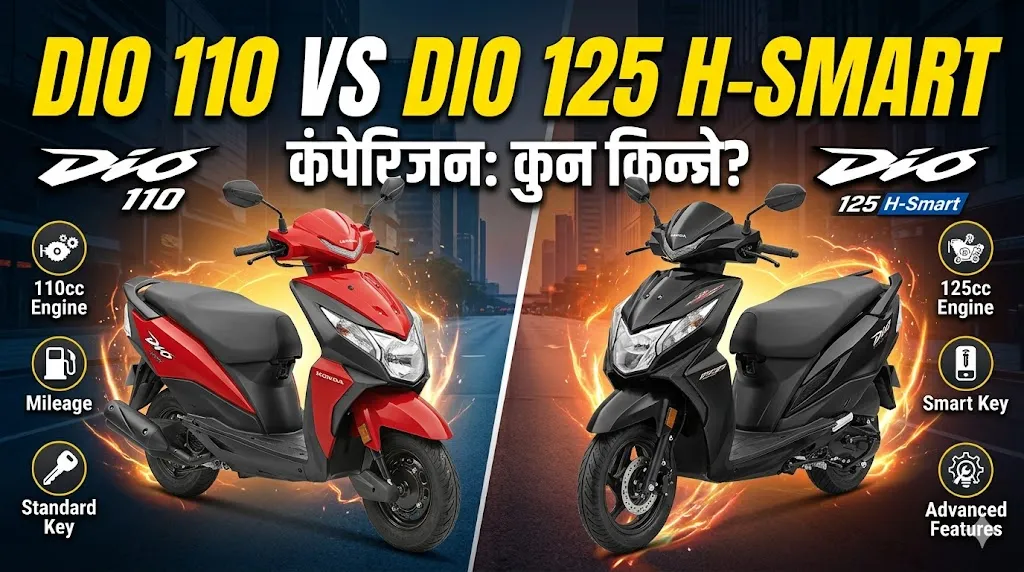
The reason we're writing this is because the question we get asked most on MotorMandu is not "what is the best scooter in Nepal" — it is specifically "should I buy the Dio 125 or the Dio 110?"
And honestly, the answer is not as simple as "just spend more and get the 125." The NPR 50,000 price gap between these two is real money. That is rent for some people. That is a full semester of college fees. So this comparison deserves an honest, detailed answer — not a copy-paste spec sheet that anyone with Google can find.
We tested both. We have opinions. Let us get into it.
Quick Specs Comparison — Dio 125 H-Smart vs Dio 110 DLX
Before we get into the real riding experience, here is everything side by side so you can see what you are actually comparing:
| Specification | Honda Dio 125 DLX H-Smart | Honda Dio 110 DLX BS6 |
|---|---|---|
| Price in Nepal | NPR 3,29,900 | NPR 2,79,900 |
| Engine | 123.92cc | 109.51cc |
| Power | 8.19 bhp @ 6,250 rpm | 7.75 bhp @ 8,000 rpm |
| Torque | 10.5 Nm @ 5,000 rpm | 9.03 Nm @ 5,250 rpm |
| Fuel System | Fuel Injection | Fuel Injection |
| Transmission | CVT | CVT |
| Top Speed | 85 km/h | 83 km/h |
| ARAI Mileage | 50 km/l | 50 km/l |
| Real World Mileage | ~47 km/l | ~48 km/l |
| Fuel Tank | 5.3 litres | 5.3 litres |
| Kerb Weight | 104 kg | 103 kg |
| Seat Height | 708 mm | 765 mm |
| Ground Clearance | 171 mm | 160 mm |
| Front Brake | Disc | Drum |
| Rear Brake | Drum | Drum |
| Brake System | CBS | CBS |
| Wheels | Alloy | Steel |
| Rear Suspension | 3-step adjustable | Unit Swing (fixed) |
| Instrument Console | 4.2" TFT | 4.2" TFT |
| Bluetooth | Yes | No |
| Smart Key / Keyless | Yes | No |
| DRL | No | Yes |
| USB Charging | Yes | Yes |
| Boot Space | 18 litres | 18 litres |
| Warranty | 3 yrs / 36,000 km | 3 yrs / 36,000 km |
| Colors | 6 colors | 5 colors |
Price difference: NPR 50,000
That NPR 50,000 is the whole question, right? Let us break down whether that gap is justified or not — section by section.
First Look — How They Feel Standing Next to Each Other
We parked both scooters side by side outside the Balkhu petrol pump before starting our Dakshinkali run and took a proper look at both.
The Dio 125 H-Smart immediately looks like it has more going on. The body lines are sharper, the front apron sits lower and more aggressive, and there is something about the alloy wheels that makes it look more expensive even before you check the price tag. Standing still, it looks like a scooter that knows what it is.
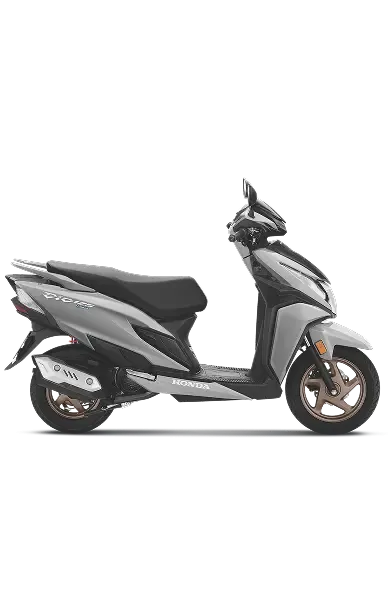
The Dio 110, on the other hand, looks clean and simple. Not boring — clean. The steel wheels are the one visual giveaway that this is the budget option, but if you are not specifically looking for it, most people will not notice. The DRL strip on the front actually gives it a more modern face than you would expect for its price.
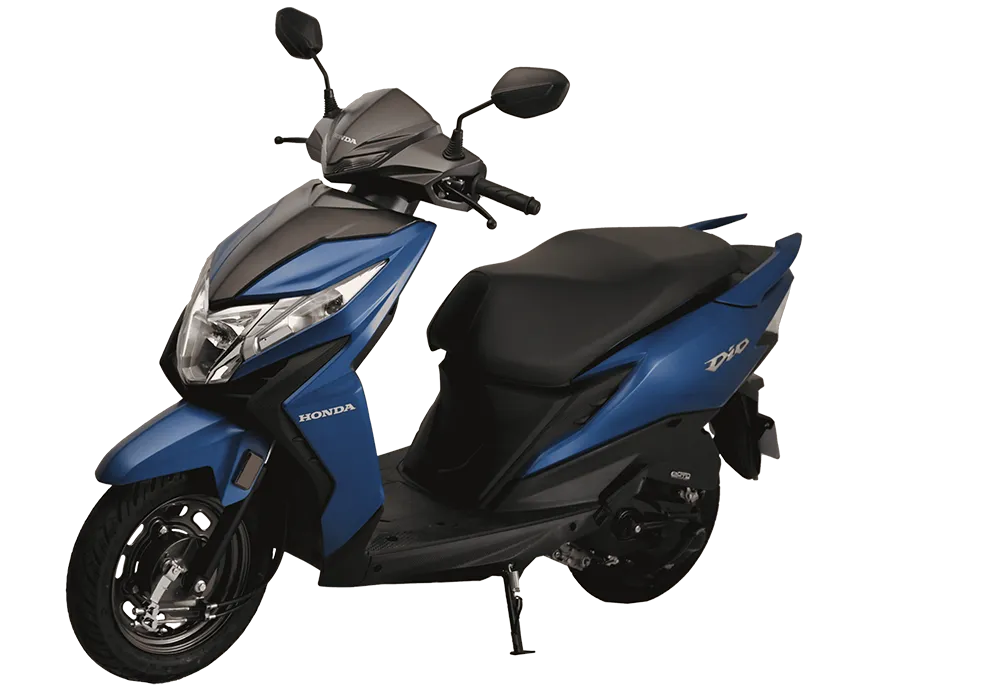
Here is the funny part though — the Dio 125 has a lower seat height (708 mm vs 765 mm on the Dio 110). We did not expect that. The 125 actually feels easier to put your feet flat on the ground, which is counterintuitive but genuinely useful for shorter riders. More on this in the comfort section.
Both scooters feel solid in terms of build. Honda's panel gaps are consistently tight on both, and neither had any rattles or loose bits during our testing period. That is the Honda tax in action — you are paying for this build consistency whether you buy the 110 or the 125.
Engine Performance — Is the 14cc Difference Actually Noticeable?
On paper, the Dio 125 produces 8.19 bhp compared to the Dio 110's 7.75 bhp. The torque difference is 10.5 Nm vs 9.03 Nm. These numbers sound almost identical, and the truth is — in a straight line on flat road, they feel almost identical.
But "almost" is doing a lot of work in that sentence.
Inside Kathmandu traffic — the Monday morning Koteshwor test:
We specifically rode both scooters during rush hour on the Koteshwor–Tinkune stretch on a Monday morning. The kind of traffic where you are crawling at 5–10 km/h for 15 minutes, then suddenly everyone moves, then you stop again.
In this condition, both scooters feel equally smooth. The CVT on both is well-tuned for city crawling. Neither engine feels stressed or hot in slow traffic. The 110 and 125 are honestly neck and neck here.
Ring road at 50–65 km/h — where the 125 starts pulling ahead:
The ring road is where the engine difference becomes more noticeable. On the Satdobato–Kalanki stretch where the road opens up a bit, the Dio 125 pulls more willingly from 50 km/h onward. It does not feel dramatically faster — we are not talking about a 150cc bike here — but there is a smoothness to the 125's power delivery that the 110 does not fully match.
The Dio 110 reaches its comfortable cruising zone at around 50–55 km/h. Push it to 65–70 km/h and it will get there, but you feel the engine working harder. The Dio 125 sits at 60–65 km/h with noticeably more ease, like it has more in reserve.
The Balkhu to Dakshinkali uphill climb — real talk:
This is the test that separates the two scooters most clearly.
The Balkhu to Dakshinkali road is roughly 18 km from Balkhu chowk, and it is not a gentle slope. The road climbs through Thankot road area, through Chobar, up past Champadevi, and into the hills. If you have ridden this road before, you know the feeling — especially the steeper sections after Chobar where lesser scooters start losing confidence.
With single rider: Both scooters handled the climb. The Dio 125 felt more composed — maintained momentum better on the steeper sections, did not require as much throttle to hold 40–45 km/h on the incline. The Dio 110 climbed it fine too, but you were more aware of the engine working. You felt the need to use more throttle, which obviously affects mileage.
With pillion rider: This is where the difference becomes genuinely significant. We ran both scooters up the same route with a pillion passenger of about 65 kg.
The Dio 125 with pillion — still manageable. Lost some pace on the steepest section but maintained 35–40 km/h without feeling desperate. The engine note stayed composed.
The Dio 110 with pillion up that same section — you need to plan ahead. You feel the engine straining noticeably. Speed dropped to 25–30 km/h on the steepest parts, and you were basically at full throttle. It got there, but it was working hard.
If you frequently carry a pillion on hilly routes in Nepal — Kathmandu valley roads, heading to Nagarkot, Daman, Kakani, Pokhara's hillside areas — the Dio 125's engine advantage is genuinely useful. If you ride solo in flat city traffic 90% of the time, the 110 will feel almost identical.
The H-Smart System — Is Bluetooth on a Scooter Actually Useful?
Let us talk about the biggest difference between these two scooters — the H-Smart technology on the Dio 125.
Smart Key and Keyless Entry:
You walk up to the Dio 125, tap the handle once with your key fob nearby, and it unlocks. No key in the ignition. Press the start button, it starts. Lock it by tapping again or by walking away.
Is this genuinely useful or just a gimmick?
After two weeks of using it daily, the honest answer is — it is genuinely useful, but not life-changing. The convenience is real. When you are juggling a bag, a helmet, and your phone, not having to fish for a key in your pocket is a small but real improvement to daily life.
The anti-theft aspect is the more practical benefit. The smart key means traditional hotwiring does not work. For a scooter parked outside college or in Thamel's crowded bike parks, that matters.
Bluetooth and the Honda RoadSync App:
Connect your phone to the Dio 125 via Bluetooth and the 4.2-inch TFT display shows incoming calls, messages, music controls, and turn-by-turn navigation arrows.
We tested this on the ring road with Google Maps running on a connected phone. The navigation arrows appearing on the instrument cluster genuinely work and genuinely help. For someone new to a route, it removes the need to check your phone while riding. In Kathmandu where taking your eyes off the road for 2 seconds can mean hitting a pothole or a suddenly stopped vehicle, that matters for safety.
The Dio 110's 4.2-inch TFT display looks identical to the 125's from a distance, but it has zero connectivity. It shows speed, fuel, odometer — standard stuff. Functional, but no smart integration.
External Fuel Lid Opening:
Both scooters have external fuel filling — meaning you do not have to open the seat to fill petrol. This sounds minor but if you fill up every 4–5 days in Kathmandu traffic, not having to get off and fumble with the seat every time is legitimately convenient.
Bottom line on H-Smart: If you are the kind of person who uses Google Maps for every ride, values anti-theft security, and wants navigation on your instrument cluster — the H-Smart system is worth paying for. If you just want to ride from home to office and back and none of that matters to you, the Dio 110 will serve you equally well for NPR 50,000 less.
Mileage — The Surprising Truth
Here is something that will confuse you when you first see the specs: the Dio 110 has slightly better real-world mileage than the Dio 125.
Both claim 50 km/l ARAI. But in real Nepal riding, the 110 returns approximately 48 km/l while the 125 returns approximately 47 km/l.
Our measurements over the test period:
| Riding Condition | Dio 125 H-Smart | Dio 110 DLX |
|---|---|---|
| Heavy Kathmandu traffic | 43–45 km/l | 45–47 km/l |
| Ring road steady riding | 47–49 km/l | 48–50 km/l |
| Balkhu–Dakshinkali uphill | 38–42 km/l | 36–40 km/l |
| Mixed city average | 46–48 km/l | 47–49 km/l |
Two things explain this:
First, the Dio 125's larger engine consumes marginally more fuel under equivalent conditions. The difference is tiny — roughly 1 km/l less — and in daily use you will probably not notice it at the pump.
Second, on uphill sections the 125 actually does better than the 110 because it does not need to work as hard. At full throttle on an incline, a smaller engine that is fully stretched often uses more fuel per km than a larger engine running more comfortably.
With the identical 5.3-litre fuel tank on both, the practical range per fill is:
- Dio 125: approximately 245–255 km
- Dio 110: approximately 250–260 km
The difference is negligible for real-world ownership. Neither scooter is going to stress you out about fuel range in Kathmandu or any typical Nepal city.
Ride Comfort — The Seat Height Twist
Here is something that surprises most people: the Dio 125 H-Smart has a lower seat height (708 mm) than the Dio 110 DLX (765 mm).
That 57 mm difference is significant. For reference, 57 mm is roughly the height difference between wearing flip flops and wearing thick-soled sneakers.
One of our team members who is 5'2" rode both scooters back to back from Balkhu to Satdobato. On the Dio 125, both feet flat on the ground at traffic lights, comfortable, confident. On the Dio 110, one foot flat, one foot tiptoe — manageable but noticeably different.
For Nepal specifically, where a significant portion of daily riders are shorter in height — and where stopping confidently at the Kalanki light or the ring road crossings requires solid footing — this difference matters more than the spec sheet suggests.
Suspension:
The Dio 125 comes with a 3-step adjustable rear suspension, which the Dio 110 does not have. On the Balkhu road test, we set the 125's rear preload to the softer setting for the single-rider city section and noticed the difference on the broken road patches near Chobar. More absorbed, less transmitted to your lower back.
The Dio 110's fixed unit swing rear suspension is comfortable for light daily use but has no adjustment — what you get is what you get. It handles small potholes fine. On bigger impacts, like the road construction damaged sections near Naya Baneshwor, you feel it more than on the 125.
Both scooters have telescopic front forks which perform similarly — adequate for city riding, not particularly plush.
Pillion comfort:
The seat on both scooters is similar in width and cushioning. Pillion riders on both scooters reported comparable comfort for trips up to about 45–60 minutes. The Dio 125's adjustable rear preload does help with pillion comfort if you remember to adjust it before a longer trip.
Brakes — This Is Where the Dio 125 Clearly Wins
The Dio 125 has a front disc brake. The Dio 110 has drum brakes on both wheels.
This is the most significant safety difference between the two scooters and in our opinion, it is one of the strongest arguments for spending the extra money on the 125.
During our Dakshinkali run, we had a moment near the steep descent from Champadevi area where a dog ran across the road. Standard Nepal riding hazard. With the Dio 125, front disc bite was immediate, progressive, and stopped the scooter confidently within a short distance. With the Dio 110 in the same situation (we tested the same scenario safely at a quiet section), the drum brakes needed more lever pressure and more distance to reach the same stopping point.
In dry conditions, both scooters brake adequately for city use. In wet conditions — monsoon Kathmandu, wet ring road, puddles near Balkhu bridge — the disc brake on the Dio 125 maintains more consistent bite. Drum brakes in wet conditions require more distance and more lever force.
Both scooters use CBS (Combi Brake System), which links front and rear braking to prevent wheel lock-up. For beginner riders especially, this is a valuable safety feature on both.
But disc versus drum is not just a performance issue — it is a safety investment. Kathmandu's traffic requires sudden stops multiple times every single ride. Having a more responsive front brake is not a luxury, it is genuinely useful every day.
The Dio 110's drum brakes are adequate. They are not dangerous. Many riders have used drum-only scooters for years without incident. But if you are choosing between these two scooters for Nepal's traffic conditions and unpredictable road hazards, the Dio 125's front disc is a meaningful advantage.
Design and Color Options
Both scooters share the same basic body shape — after all, the 110 and 125 are part of the same Dio family. But there are noticeable differences in visual finish.
Honda Dio 125 H-Smart color options:
- Pearl Nightstar Black
- Pearl Siren Blue
- Pearl Deep Ground Grey
- Matte Axis Grey Metallic
- Sport Red
- Mat Marvel Blue Metallic
Honda Dio 110 DLX color options:
- Matte Dark Blue
- Dazzle Yellow Metallic
- Mat Axis Grey Metallic
- Silver
- Mat Sangria Red Metallic
The 125 gets one extra color option and the Pearl finishes have a noticeably deeper quality than the standard finishes on the 110. Under direct sunlight, the Pearl Siren Blue on the 125 especially looks premium in a way the equivalent blue on the 110 does not quite match.
The alloy wheels on the Dio 125 versus steel wheels on the 110 is a visible difference that makes the 125 look more expensive even when both are the same color. Alloy wheels also save a small amount of unsprung weight, which contributes marginally to handling feel.
Who is Each Scooter Actually For?
Let us be direct about this because it is the question you came here to answer.
Buy the Honda Dio 125 DLX BS6 H-Smart if:
You are a student or young professional who wants the best scooter in the 125cc segment without going over NPR 3.3 lakh. You ride daily in Kathmandu but also occasionally head to hilly routes — Nagarkot, Daman, Pokhara hillsides, Dakshinkali. You care about having a front disc brake. You want Bluetooth navigation on your instrument cluster. You frequently carry a pillion. You are on the shorter side and a lower seat height is important. You want smart key anti-theft because your scooter gets parked in Thamel, Lazimpat, Baneshwor, or college parking where scooter theft is a real concern.
Buy the Honda Dio 110 DLX BS6 if:
Your budget is firm and NPR 50,000 genuinely matters. You ride almost exclusively in flat city traffic — Kathmandu valley roads, going to office and back, local errands. You ride solo most of the time. You do not care about Bluetooth, smart key, or disc brakes. You want the cheapest scooter with Honda reliability and a TFT display. You are a first-time rider or buying a scooter for a family member who just needs a reliable, low-cost daily runner.
Full Breakdown Comparison Table
| Category | Dio 125 H-Smart | Dio 110 DLX | Winner |
|---|---|---|---|
| Price | NPR 3,29,900 | NPR 2,79,900 | 110 (cheaper) |
| Engine Power | 8.19 bhp | 7.75 bhp | 125 |
| Torque | 10.5 Nm | 9.03 Nm | 125 |
| City Performance | Excellent | Excellent | Tie |
| Uphill with Pillion | Very good | Adequate | 125 |
| Real Mileage | ~47 km/l | ~48 km/l | 110 (marginally) |
| Seat Height | 708 mm (lower) | 765 mm | 125 (better for short riders) |
| Ground Clearance | 171 mm | 160 mm | 125 |
| Front Brake | Disc | Drum | 125 |
| Rear Suspension | 3-step adjustable | Fixed | 125 |
| Wheels | Alloy | Steel | 125 |
| TFT Display | 4.2 inch | 4.2 inch | Tie |
| Bluetooth | Yes | No | 125 |
| Smart Key / Keyless | Yes | No | 125 |
| DRL | No | Yes | 110 |
| USB Charging | Yes | Yes | Tie |
| Boot Space | 18 litres | 18 litres | Tie |
| Colors | 6 options | 5 options | 125 |
| Warranty | 3yr/36,000km | 3yr/36,000km | Tie |
| Value for money | Good | Excellent | 110 |
| Overall features | Premium | Basic | 125 |
Score: Dio 125 H-Smart wins 10 categories. Dio 110 wins 3. 5 ties.
But remember — winning more categories does not automatically mean it is the right choice for you. The Dio 110 wins the most important category for many buyers: price.
The NPR 50,000 Question
This is worth spending a paragraph on because it is the actual decision most people are making.
NPR 50,000 is a real amount of money. At 47 km/l mileage and petrol at roughly NPR 180/litre, the 125 costs about NPR 3.82 per km in fuel. The 110 at 48 km/l costs about NPR 3.75 per km. The fuel cost difference over 30,000 km of riding is approximately NPR 2,000 total. Meaningless.
So the NPR 50,000 gap is not recovered through fuel savings. You are paying for:
- Front disc brake (safety)
- Smart key with anti-theft
- Bluetooth navigation
- Alloy wheels
- Lower seat height
- Adjustable rear suspension
- More comfortable uphill performance with pillion
- The peace of mind of having a more capable engine
If three or four of those things matter to your real daily riding life, the NPR 50,000 is justified. If none of them sound like things you would actually use regularly, save the money and buy the 110.
There is no wrong answer here. Both are genuinely good scooters. Honda does not make bad products in this segment.
Our Balkhu to Dakshinkali Verdict
After two full days of riding both scooters on this specific route — morning rush hour Balkhu to Kalanki, then up through Chobar, Champadevi, and into Dakshinkali — we came back with clear impressions.
The Dio 125 H-Smart was the more enjoyable scooter to ride on this route. Not dramatically better, but consistently more comfortable — easier on inclines, more confidence in braking on the descent, lower seat height easier at busy crossings, navigation on the display helpful when checking whether to take the Chobar shortcut or the main road.
The Dio 110 DLX completed exactly the same route without complaint. It was not dramatic or exciting but it did the job. If this was the only scooter we had available, we would have zero complaints getting to Dakshinkali and back on it.
The difference is the gap between a good scooter and a great scooter. The 110 is good. The 125 is great. Whether that gap is worth NPR 50,000 depends entirely on how you ride and what you value.
Final Verdict — MotorMandu's Recommendation
Honda Dio 125 DLX BS6 H-Smart — 8.8/10 Best for: Daily commuters who want premium features, riders on hilly routes, pillion riders, short riders, tech-minded buyers.
Honda Dio 110 DLX BS6 — 8.2/10 Best for: Budget-focused buyers, flat city commuting, first-time riders, students with tight budgets, simple no-fuss ownership.
If money is not a constraint, buy the Dio 125 H-Smart without thinking too hard. It is the better scooter in every measurable way except price.
If NPR 50,000 matters to you — and there is no shame in that being the case — the Dio 110 DLX gives you Honda reliability, good mileage, a TFT display, USB charging, and a smooth daily scooter for NPR 2,79,900. That is still a good deal.
Whatever you decide, you are buying a Honda. Both scooters will start reliably every morning, cost you very little in maintenance, and hold their resale value better than most alternatives in the Nepal market. The hard part is choosing between them. The easy part is knowing that either choice is a solid one.
Tested and written by the MotorMandu team. Both scooters tested on Kathmandu Ring Road, Balkhu–Dakshinkali route, and daily commute conditions across Lalitpur and Kathmandu. Prices as of June 2026. Verify current prices with Honda Nepal authorised dealers.
About The Author
Prabin Bhusal
Automotive Editor & Reviewer


