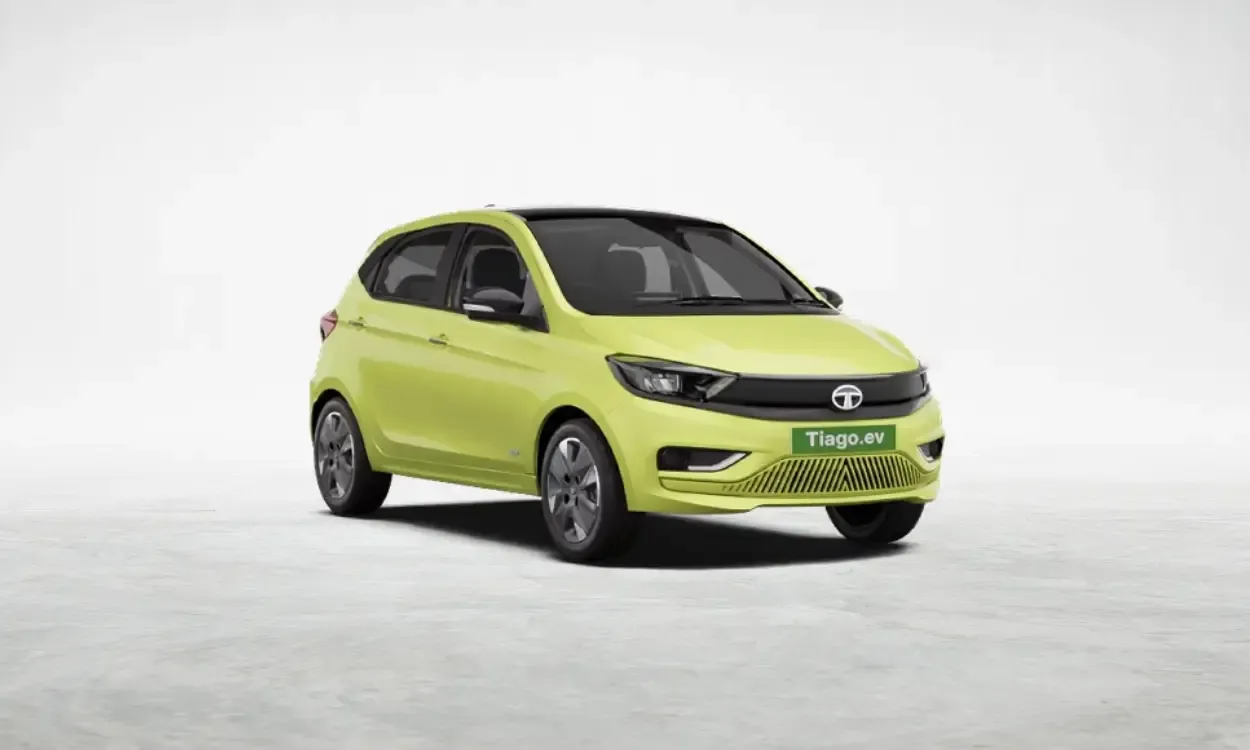
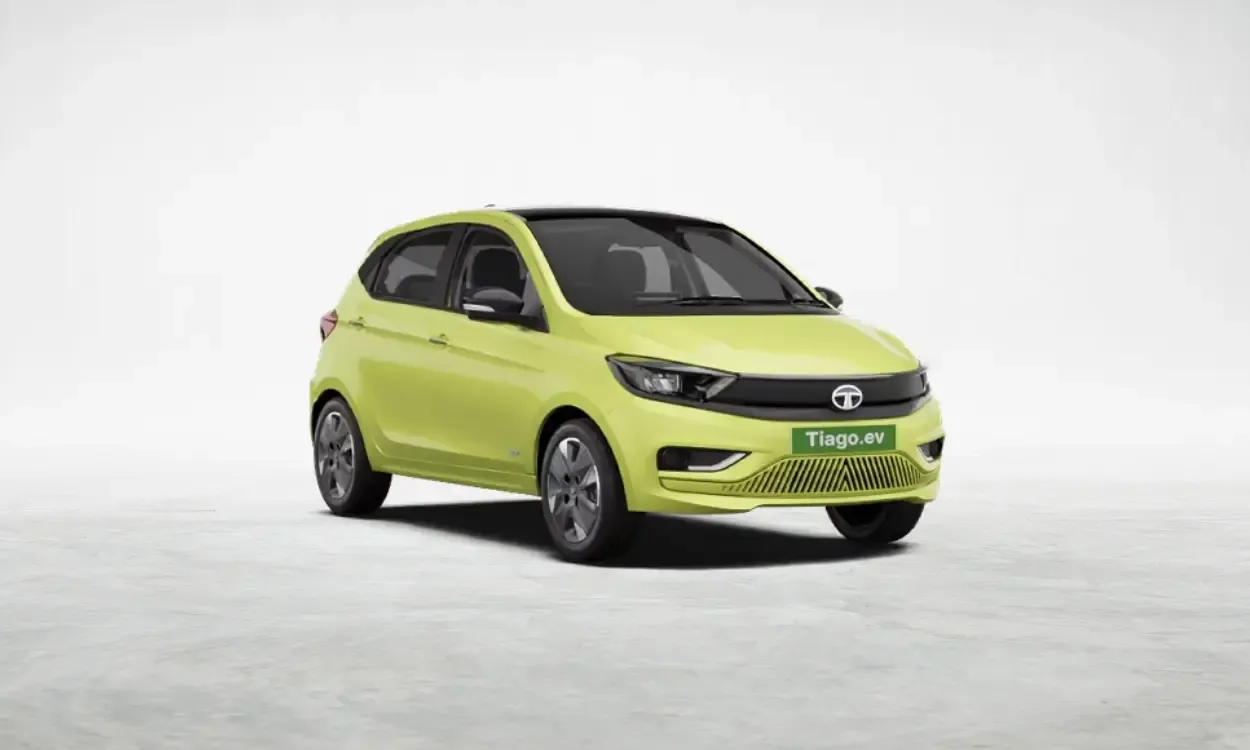
Nepal's most affordable long-range electric hatchback. The Tata Tiago.ev LR offers a 291 km MIDC certified range (205 km real-world), Ziptron technology, and a 24 kWh liquid-cooled battery — ideal for daily city commuting and occasional outstation trips.
The Tata Tiago.ev has quietly become the entry point into EV ownership for Nepali families and daily commuters who are done arguing with petrol pump queues and rising fuel prices. Distributed by Sipradi Trading, the Long Range XZ+ Tech Lux variant is currently the most practical EV under Rs 30 lakh in Nepal — and unlike a lot of EVs that look great on paper and disappoint in the hills, this one has actually been driven the way Nepali owners will drive it: daily office commutes around the Kathmandu Valley, and a full Kathmandu-to-Pokhara run to see what the range numbers actually mean on real roads.
Quick specs at a glance:
Spec
Value
Motor
48 kW PMSM (Ziptron)
Power
65.3 PS
Torque
114 Nm
Battery
24 kWh, Liquid Cooled, IP67
Range (MIDC)
291 km
Range (Real-World, C75)
205 km
Top Speed
120 km/h
0-60 km/h
5.7 sec
Drivetrain
FWD, Automatic
Charging (DC 25kW, 10-80%)
~58 mins
Charging (AC 7.2kW, 10-100%)
~3.6 hrs
Charging (Home 15A, 10-100%)
~8.7 hrs
Dimensions (L x W x H)
3781 x 1677 x 1536 mm
Wheelbase
2400 mm
Boot Space
240 litres
Kerb Weight
1235 kg
Brakes
Front Disc, Rear Drum, ABS+EBD
Wheels
14-inch Alloy, Tubeless
Regenerative Braking
4-level (0-3)
Warranty
3yr/1,25,000km Vehicle, 8yr/1,60,000km Battery & Motor
Price in Nepal
Rs 27,49,000 (XT) / Rs 29,99,000 (XZ+ Tech Lux)
Our test plan was simple and deliberately realistic: two weeks of daily Kathmandu Valley driving — office commutes through Koteshwor, Ring Road laps, weekend errands — followed by a single full-tank highway run from Kathmandu to Pokhara to see exactly how far the claimed range stretches once you leave the valley. Here's what we found.
Nepal&Amp;#039;S Most Affordable Long Range Electric Hatchback. The Tata Tiago.ev Lr Offers A 291 Km Midc Certified Range (205 Km Real World), Ziptron Technology, And A 24 Kwh Liquid Cooled Battery — Ideal For Daily City Commuting And Occasional Outstation Trips.
Status
Yes
Launch Status Nepal
Yes
Updated Price Date
2026 06 14 00:00:00
Updated Price Showroom
4
Emission Type
Zero Emission
Gear Box
Automatic
Engine Type Details
Pmsm Ziptron
Riding Range
315.00
Riding Modes
City, Sport
Standard Warranty (Years)
8
Standard Warranty (KM)
160000
Additional Features
4 Airbags, Android Auto, Apple Carplay, Semi Digital Instrument Cluster
Twist Beam With Coil Spring, Hydraulic Shock Absorbers
Chassis Material
Steel
Front Suspension Preload Adjuster
No
Rear Suspension Preload Adjuster
No
verified_user
Comfort Features
Seat Type
Fabric
Cruise Control
Yes
USB Charging Port
Yes
Roof Rails
Yes
Sunroof/Moonroof
No
AC/Climate Control
Yes
Infotainment Screen
Yes
Power Windows
Yes
Steering Adjustment
Yes
Seat Adjustment
Yes
verified_user
Dimension & Weight
Overall Length
3781
Overall Width
1677
Overall Height
1536
Wheelbase
2400
Ground Clearance
165
Kerb Weight
1235
Boot Space
240
Turning Radius
5.1
verified_user
Electrical
Battery Capacity
24Kwh
Headlight Type
Projector With Led Drl
Tail Light
Led
Turn Signal
Led
DRLs
Yes
Instrument Console
Semi Digital
Speedometer
Digital
Odometer
Digital
Fuel Gauge
Digital (Battery Gauge)
Mobile Connectivity
Yes
Fog Lamps
Yes
Charging Time (Normal)
8.7
Charging Time (Fast)
3.6
Charging Time (DC)
58
Charger Type
57 Min (Dc 25Kw)
Digital Display Type
10.25 Inch
Keyless Lock/Unlock
Yes
Vehicle Location Tracking
Yes
Geo Fencing
Yes
verified_user
Fuel & Mileage
Fuel Type
Electric
Mileage (ARAI)
291
Mileage (Real World)
205
Emission Standard
Zero Emission
verified_user
Safety Features
ABS
Yes
ESC
Yes
Traction Control
Yes
Stability Control
Yes
Central Locking
Yes
Airbags
Yes
Hill Hold
Yes
Hill Descend
No
Parking Sensors
No
Rear Camera
Yes
Design & Build Quality
The Tiago.ev doesn't try to look like a "concept car on wheels" the way some EVs do. It looks like a Tiago — which is the point. The facelifted model gets subtly reworked front bumper lines, replacing the older net-like grille pattern with sharper angular cuts, plus projector headlamps with LED DRLs that give it a slightly more premium face than the ICE Tiago.
In daily Kathmandu driving, this matters more than it sounds. The Tiago.ev doesn't draw stares, doesn't invite the "EV tax" assumption from parking attendants, and slots into narrow Kuleshwor and Patan lanes exactly like any other hatchback its size. The 240-litre boot swallowed a week's worth of office bags and a grocery run without complaint, though it's genuinely tight if you're loading for a Pokhara trip with multiple passengers — more on that later.
Build quality on the inside feels a notch above what the Tiago.ev's price suggests. The dashboard layout is clean, the 10.25-inch touchscreen is centrally mounted and doesn't feel like an aftermarket addition, and the semi-digital instrument cluster is easy to read in Kathmandu's harsh midday sun.
Engine & Transmission Performance
The 48 kW Permanent Magnet Synchronous Motor producing 65.3 PS and 114 Nm of torque is, on paper, modest. In practice, it's one of the most pleasant surprises of daily EV ownership.
Kathmandu Valley commute:
EVs deliver torque instantly, and in Kathmandu's stop-start traffic — Koteshwor signal, Maitighar loop, Ring Road merges — this is transformative. There's no clutch, no gear hunting, no waiting for an engine to "wake up" in first gear. Foot down, the Tiago.ev moves with a confidence that genuinely surprises drivers coming from petrol hatchbacks. Overtaking a slow microbus on Ring Road in a short gap is no longer a moment of hesitation — the instant torque is simply there.
City vs Sport mode:
In City mode, throttle response is gentler and more progressive — ideal for crawling traffic where smoothness matters more than urgency. Switch to Sport, and the same right pedal suddenly feels far more eager, useful for merging onto Ring Road from a service lane where gaps close quickly.
Kathmandu to Pokhara — highway behaviour:
On the open Prithvi Highway stretches, the Tiago.ev settled into a comfortable 70-80 km/h cruise without drama. The motor is whisper-quiet at these speeds — genuinely one of the most peaceful highway experiences we've had in this price bracket, simply because there's no engine note at all, just tyre and wind noise. The claimed 120 km/h top speed is achievable on the flatter sections near Mugling, though sustained high-speed cruising is where range drops fastest — a pattern we'll come back to in the Mileage section.
Handling & Ride Comfort
City handling:
At 1235 kg, the Tiago.ev carries noticeable weight from its battery pack, but Tata has tuned the suspension to absorb this well in city conditions. The independent McPherson strut front and twist-beam rear with coil springs handled Kathmandu's patchwork roads — the broken sections near Kalanki, the speed breakers outside schools in Jawalakhel — without harshness. The lower center of gravity from the underfloor battery pack actually gives the Tiago.ev a more planted, settled feel through corners than the ICE Tiago.
The 5.1-metre turning radius is on the larger side for this segment, and we noticed it specifically during multi-point turns in tight Patan and Thamel-area lanes — plan your U-turns a little earlier than you would in a smaller hatchback.
Kathmandu-Pokhara — highway and ghat sections:
The Mugling-Pokhara stretch, with its tighter bends and elevation changes, is where the Tiago.ev's weight and regenerative braking work together nicely. Lifting off the accelerator on downhill sections engages regen braking, which both recovers energy and reduces reliance on the physical brakes through the winding ghat roads — a genuinely useful characteristic on a route with this many descents.
Regenerative braking in practice:
The 4-level regen system (0 = no regen, 3 = maximum) let us tailor the driving feel to the road. On the highway, Level 1 felt natural — gentle deceleration on lift-off without feeling like engine braking is suddenly very aggressive. On the Mugling descents, Level 2-3 noticeably reduced brake pedal use and added a small but real amount of range back.
Brakes, Suspension & Safety
Front disc, rear drum, with ABS and EBD — a sensible setup for this segment and one that performed predictably throughout testing.
City braking:
In Kathmandu traffic, the front disc provided confident, progressive stopping power. Combined with regen braking doing a lot of the initial deceleration work, we found ourselves using the brake pedal less aggressively than in a comparable petrol hatchback — the car was already slowing down the moment you lifted off.
Highway braking:
On the Kathmandu-Pokhara run, braking from highway speeds (particularly on the winding sections past Mugling) felt secure, with ABS intervening cleanly on a couple of occasions when traffic braked suddenly ahead. No fade, no nervousness, even after repeated braking on the descents.
Suspension on rough sections:
The twist-beam rear with hydraulic shocks managed the rougher patches on both the valley roads and the highway well, though the extra weight does mean you feel larger bumps transmitted slightly more than in the lighter ICE Tiago — a reasonable tradeoff for the EV's planted highway stability.
Real-World Mileage & Efficiency
This is the section every prospective Tiago.ev owner actually cares about, and we tested it as honestly as possible.
Claimed (ARAI MIDC): 291 km Claimed (Tata.ev C75 real-world): 205 km Our observed range, Kathmandu to Pokhara: 205 km
That last figure deserves context. Driving from Kathmandu to Pokhara — a mix of valley roads to reach the highway, sustained 70-80 km/h cruising on the Prithvi Highway, and the climbing/descending sections through Mugling — the Tiago.ev delivered almost exactly its official C75 real-world figure of 205 km on a full charge. For a manufacturer-claimed "real-world" number to actually hold up on a genuine intercity Nepali route, with elevation changes and varying speeds, is a meaningfully good result — and a refreshing change from EVs where the real-world figure quietly turns into a "best case" figure.
Our measured range by condition:
Driving Condition
Observed Range
Kathmandu Valley daily commute (city, traffic, AC on)
~190-200 km equivalent
Highway cruising at 70-80 km/h
Range drops faster — closer to 180-190 km equivalent at sustained speed
Kathmandu to Pokhara (mixed city + highway + hills)
205 km on full charge
For context: a typical Kathmandu Valley office commuter doing 25-30 km a day round trip would get roughly 6-7 days of driving from a single full charge under daily city conditions — charging once a week at home overnight (8.7 hours on a standard plug) fits naturally into most routines without ever needing a public charger.
For the Kathmandu-Pokhara route specifically: 205 km means the Tiago.ev LR can comfortably make the ~200 km journey on a single charge from a full battery, though we'd recommend topping up in Pokhara before the return leg rather than cutting it close — there's effectively zero buffer at 205 km claimed vs 205 km achieved.
Running cost comparison:
At Nepal's residential electricity rates, a full 24 kWh charge costs roughly Rs 200-300 depending on time-of-day tariffs — compared to a petrol hatchback covering the same 205 km, which at 15 km/l and Rs 180/litre would cost approximately Rs 2,460 in fuel. The cost difference per "tank" is substantial, and over a year of valley commuting, this is where the Tiago.ev's value proposition becomes obvious on paper and in your wallet.
Features & Digital Technology
The XZ+ Tech Lux trim is genuinely well-equipped for the price, and several features earned their place during testing rather than sitting unused.
10.25-inch touchscreen with Android Auto and Apple CarPlay: worked reliably throughout both the city testing and the Pokhara run — wireless navigation on the highway sections through Mugling, where signage can be inconsistent, was genuinely useful.
Cruise control: a feature we didn't expect to use much in Nepal, but on the flatter Prithvi Highway stretches near Naubise and the straighter sections before Mugling, it reduced driver fatigue noticeably on the return leg.
4 airbags + ABS with EBD: standard safety kit that matters given Nepal's mixed traffic conditions — both highway and urban.
Sunroof: a feature that's more lifestyle than function, but it added a noticeably different in-cabin feel during the Pokhara drive, particularly through the more scenic stretches.
Climate control: fully automatic, and worth noting for EV owners — running AC does measurably affect range, more so than in a petrol car since there's no "free" engine heat to offset cabin cooling/heating loads. Our city range figures already account for AC use through most of the testing.
4-level regenerative braking: covered above, but worth restating as a genuine technology highlight — it's intuitive to use and makes a real difference on hill routes.
Practicality & Daily Commuting
For Kathmandu Valley daily use, the Tiago.ev is — without exaggeration — close to ideal. Most valley commutes fall well within a single charge's range, home charging overnight means you start every day at 100%, and the compact dimensions handle valley traffic and parking exactly like a familiar hatchback.
Daily office commute: This is the Tiago.ev's best use case, full stop. Charge overnight at home (8.7 hours on a standard outlet — set it before bed, done by morning), drive to office, drive home, repeat for most of a week before needing to plug in again. No range anxiety for the vast majority of valley trips.
Weekend errands and family use: The 240-litre boot handles grocery runs and small luggage, though families planning frequent longer trips with more passengers and luggage may find it tight — this is a compact hatchback first.
Intercity travel (Kathmandu-Pokhara): Genuinely doable on a single charge based on our 205 km result, but requires planning. There's no extensive DC fast-charging network along the Prithvi Highway yet, so a Kathmandu-Pokhara-Kathmandu trip currently means charging in Pokhara (ideally overnight or for several hours) before the return leg. For a one-way trip or a trip where you're staying overnight in Pokhara anyway, this is a non-issue.
Hill driving: The instant torque made the climbing sections through Mugling feel relaxed rather than strained — no downshifting, no engine working audibly harder, just a consistent pull. This is one of the genuine advantages EVs have over petrol cars in Nepal's terrain.
Service & Maintenance Intervals
Overview
The Tata Tiago.ev has quietly become the entry point into EV ownership for Nepali families and daily commuters who are done arguing with petrol pump queues and rising fuel prices. Distributed by Sipradi Trading, the Long Range XZ+ Tech Lux variant is currently the most practical EV under Rs 30 lakh in Nepal — and unlike a lot of EVs that look great on paper and disappoint in the hills, this one has actually been driven the way Nepali owners will drive it: daily office commutes around the Kathmandu Valley, and a full Kathmandu-to-Pokhara run to see what the range numbers actually mean on real roads.
Quick specs at a glance:
Spec
Value
Motor
48 kW PMSM (Ziptron)
Power
65.3 PS
Torque
114 Nm
Battery
24 kWh, Liquid Cooled, IP67
Range (MIDC)
291 km
Range (Real-World, C75)
205 km
Top Speed
120 km/h
0-60 km/h
5.7 sec
Drivetrain
FWD, Automatic
Charging (DC 25kW, 10-80%)
~58 mins
Charging (AC 7.2kW, 10-100%)
~3.6 hrs
Charging (Home 15A, 10-100%)
~8.7 hrs
Dimensions (L x W x H)
3781 x 1677 x 1536 mm
Wheelbase
2400 mm
Boot Space
240 litres
Kerb Weight
1235 kg
Brakes
Front Disc, Rear Drum, ABS+EBD
Wheels
14-inch Alloy, Tubeless
Regenerative Braking
4-level (0-3)
Warranty
3yr/1,25,000km Vehicle, 8yr/1,60,000km Battery & Motor
Price in Nepal
Rs 27,49,000 (XT) / Rs 29,99,000 (XZ+ Tech Lux)
Our test plan was simple and deliberately realistic: two weeks of daily Kathmandu Valley driving — office commutes through Koteshwor, Ring Road laps, weekend errands — followed by a single full-tank highway run from Kathmandu to Pokhara to see exactly how far the claimed range stretches once you leave the valley. Here's what we found.
Design & Build Quality
The Tiago.ev doesn't try to look like a "concept car on wheels" the way some EVs do. It looks like a Tiago — which is the point. The facelifted model gets subtly reworked front bumper lines, replacing the older net-like grille pattern with sharper angular cuts, plus projector headlamps with LED DRLs that give it a slightly more premium face than the ICE Tiago.
In daily Kathmandu driving, this matters more than it sounds. The Tiago.ev doesn't draw stares, doesn't invite the "EV tax" assumption from parking attendants, and slots into narrow Kuleshwor and Patan lanes exactly like any other hatchback its size. The 240-litre boot swallowed a week's worth of office bags and a grocery run without complaint, though it's genuinely tight if you're loading for a Pokhara trip with multiple passengers — more on that later.
Build quality on the inside feels a notch above what the Tiago.ev's price suggests. The dashboard layout is clean, the 10.25-inch touchscreen is centrally mounted and doesn't feel like an aftermarket addition, and the semi-digital instrument cluster is easy to read in Kathmandu's harsh midday sun.
Engine (Motor & Powertrain)
The 48 kW Permanent Magnet Synchronous Motor producing 65.3 PS and 114 Nm of torque is, on paper, modest. In practice, it's one of the most pleasant surprises of daily EV ownership.
Kathmandu Valley commute:
EVs deliver torque instantly, and in Kathmandu's stop-start traffic — Koteshwor signal, Maitighar loop, Ring Road merges — this is transformative. There's no clutch, no gear hunting, no waiting for an engine to "wake up" in first gear. Foot down, the Tiago.ev moves with a confidence that genuinely surprises drivers coming from petrol hatchbacks. Overtaking a slow microbus on Ring Road in a short gap is no longer a moment of hesitation — the instant torque is simply there.
City vs Sport mode:
In City mode, throttle response is gentler and more progressive — ideal for crawling traffic where smoothness matters more than urgency. Switch to Sport, and the same right pedal suddenly feels far more eager, useful for merging onto Ring Road from a service lane where gaps close quickly.
Kathmandu to Pokhara — highway behaviour:
On the open Prithvi Highway stretches, the Tiago.ev settled into a comfortable 70-80 km/h cruise without drama. The motor is whisper-quiet at these speeds — genuinely one of the most peaceful highway experiences we've had in this price bracket, simply because there's no engine note at all, just tyre and wind noise. The claimed 120 km/h top speed is achievable on the flatter sections near Mugling, though sustained high-speed cruising is where range drops fastest — a pattern we'll come back to in the Mileage section.
Handling & Ride Comfort
City handling:
At 1235 kg, the Tiago.ev carries noticeable weight from its battery pack, but Tata has tuned the suspension to absorb this well in city conditions. The independent McPherson strut front and twist-beam rear with coil springs handled Kathmandu's patchwork roads — the broken sections near Kalanki, the speed breakers outside schools in Jawalakhel — without harshness. The lower center of gravity from the underfloor battery pack actually gives the Tiago.ev a more planted, settled feel through corners than the ICE Tiago.
The 5.1-metre turning radius is on the larger side for this segment, and we noticed it specifically during multi-point turns in tight Patan and Thamel-area lanes — plan your U-turns a little earlier than you would in a smaller hatchback.
Kathmandu-Pokhara — highway and ghat sections:
The Mugling-Pokhara stretch, with its tighter bends and elevation changes, is where the Tiago.ev's weight and regenerative braking work together nicely. Lifting off the accelerator on downhill sections engages regen braking, which both recovers energy and reduces reliance on the physical brakes through the winding ghat roads — a genuinely useful characteristic on a route with this many descents.
Regenerative braking in practice:
The 4-level regen system (0 = no regen, 3 = maximum) let us tailor the driving feel to the road. On the highway, Level 1 felt natural — gentle deceleration on lift-off without feeling like engine braking is suddenly very aggressive. On the Mugling descents, Level 2-3 noticeably reduced brake pedal use and added a small but real amount of range back.
Brakes & Suspension
Front disc, rear drum, with ABS and EBD — a sensible setup for this segment and one that performed predictably throughout testing.
City braking:
In Kathmandu traffic, the front disc provided confident, progressive stopping power. Combined with regen braking doing a lot of the initial deceleration work, we found ourselves using the brake pedal less aggressively than in a comparable petrol hatchback — the car was already slowing down the moment you lifted off.
Highway braking:
On the Kathmandu-Pokhara run, braking from highway speeds (particularly on the winding sections past Mugling) felt secure, with ABS intervening cleanly on a couple of occasions when traffic braked suddenly ahead. No fade, no nervousness, even after repeated braking on the descents.
Suspension on rough sections:
The twist-beam rear with hydraulic shocks managed the rougher patches on both the valley roads and the highway well, though the extra weight does mean you feel larger bumps transmitted slightly more than in the lighter ICE Tiago — a reasonable tradeoff for the EV's planted highway stability.
Mileage (Range)
This is the section every prospective Tiago.ev owner actually cares about, and we tested it as honestly as possible.
Claimed (ARAI MIDC): 291 km Claimed (Tata.ev C75 real-world): 205 km Our observed range, Kathmandu to Pokhara: 205 km
That last figure deserves context. Driving from Kathmandu to Pokhara — a mix of valley roads to reach the highway, sustained 70-80 km/h cruising on the Prithvi Highway, and the climbing/descending sections through Mugling — the Tiago.ev delivered almost exactly its official C75 real-world figure of 205 km on a full charge. For a manufacturer-claimed "real-world" number to actually hold up on a genuine intercity Nepali route, with elevation changes and varying speeds, is a meaningfully good result — and a refreshing change from EVs where the real-world figure quietly turns into a "best case" figure.
Our measured range by condition:
Driving Condition
Observed Range
Kathmandu Valley daily commute (city, traffic, AC on)
~190-200 km equivalent
Highway cruising at 70-80 km/h
Range drops faster — closer to 180-190 km equivalent at sustained speed
Kathmandu to Pokhara (mixed city + highway + hills)
205 km on full charge
For context: a typical Kathmandu Valley office commuter doing 25-30 km a day round trip would get roughly 6-7 days of driving from a single full charge under daily city conditions — charging once a week at home overnight (8.7 hours on a standard plug) fits naturally into most routines without ever needing a public charger.
For the Kathmandu-Pokhara route specifically: 205 km means the Tiago.ev LR can comfortably make the ~200 km journey on a single charge from a full battery, though we'd recommend topping up in Pokhara before the return leg rather than cutting it close — there's effectively zero buffer at 205 km claimed vs 205 km achieved.
Running cost comparison:
At Nepal's residential electricity rates, a full 24 kWh charge costs roughly Rs 200-300 depending on time-of-day tariffs — compared to a petrol hatchback covering the same 205 km, which at 15 km/l and Rs 180/litre would cost approximately Rs 2,460 in fuel. The cost difference per "tank" is substantial, and over a year of valley commuting, this is where the Tiago.ev's value proposition becomes obvious on paper and in your wallet.
Features & Technology
The XZ+ Tech Lux trim is genuinely well-equipped for the price, and several features earned their place during testing rather than sitting unused.
10.25-inch touchscreen with Android Auto and Apple CarPlay: worked reliably throughout both the city testing and the Pokhara run — wireless navigation on the highway sections through Mugling, where signage can be inconsistent, was genuinely useful.
Cruise control: a feature we didn't expect to use much in Nepal, but on the flatter Prithvi Highway stretches near Naubise and the straighter sections before Mugling, it reduced driver fatigue noticeably on the return leg.
4 airbags + ABS with EBD: standard safety kit that matters given Nepal's mixed traffic conditions — both highway and urban.
Sunroof: a feature that's more lifestyle than function, but it added a noticeably different in-cabin feel during the Pokhara drive, particularly through the more scenic stretches.
Climate control: fully automatic, and worth noting for EV owners — running AC does measurably affect range, more so than in a petrol car since there's no "free" engine heat to offset cabin cooling/heating loads. Our city range figures already account for AC use through most of the testing.
4-level regenerative braking: covered above, but worth restating as a genuine technology highlight — it's intuitive to use and makes a real difference on hill routes.
Practicality
For Kathmandu Valley daily use, the Tiago.ev is — without exaggeration — close to ideal. Most valley commutes fall well within a single charge's range, home charging overnight means you start every day at 100%, and the compact dimensions handle valley traffic and parking exactly like a familiar hatchback.
Daily office commute: This is the Tiago.ev's best use case, full stop. Charge overnight at home (8.7 hours on a standard outlet — set it before bed, done by morning), drive to office, drive home, repeat for most of a week before needing to plug in again. No range anxiety for the vast majority of valley trips.
Weekend errands and family use: The 240-litre boot handles grocery runs and small luggage, though families planning frequent longer trips with more passengers and luggage may find it tight — this is a compact hatchback first.
Intercity travel (Kathmandu-Pokhara): Genuinely doable on a single charge based on our 205 km result, but requires planning. There's no extensive DC fast-charging network along the Prithvi Highway yet, so a Kathmandu-Pokhara-Kathmandu trip currently means charging in Pokhara (ideally overnight or for several hours) before the return leg. For a one-way trip or a trip where you're staying overnight in Pokhara anyway, this is a non-issue.
Hill driving: The instant torque made the climbing sections through Mugling feel relaxed rather than strained — no downshifting, no engine working audibly harder, just a consistent pull. This is one of the genuine advantages EVs have over petrol cars in Nepal's terrain.
Service & Maintenance
EVs fundamentally change the maintenance conversation. There's no engine oil, no air filter, no spark plugs, no clutch — the service requirements are limited to brake fluid, coolant for the battery's liquid cooling system, tyre rotation, and general checks.
Warranty coverage:
Coverage
Terms
Vehicle Warranty
3 years or 1,25,000 km
Battery & Motor Warranty
8 years or 1,60,000 km
The 8-year battery and motor warranty is the standout figure here — it covers the most expensive component of the car for a genuinely long ownership period, which matters for buyers who are naturally cautious about EV battery degradation in Nepal's climate and road conditions.
Service network: Sipradi Trading's service centers handle Tiago.ev servicing, though the network is understandably less widespread than Hero or Honda's two-wheeler networks discussed in our motorcycle reviews. For Kathmandu Valley owners, this is a non-issue; for owners considering longer-term use outside the valley, it's worth checking service center locations along your typical routes.
The Rs 2,50,000 gap between the XT and XZ+ Tech Lux buys the larger touchscreen with Android Auto/CarPlay, sunroof, cruise control, climate control, and the more complete safety package (4 airbags). For most buyers cross-shopping against petrol hatchbacks in this price range, the XZ+ Tech Lux represents the more complete package and the one we'd recommend testing first.
On-road cost estimate: Add registration, insurance, and road tax — total on-road cost in Kathmandu for the XZ+ Tech Lux is approximately Rs 31,50,000-32,50,000 depending on current rates. EVs in Nepal benefit from significantly lower customs duty compared to petrol vehicles, which is reflected in this pricing being competitive against petrol hatchbacks with similar feature lists.
Running cost: As covered in the Mileage section, the per-km running cost is a fraction of an equivalent petrol hatchback — the kind of saving that compounds meaningfully for daily commuters over a few years of ownership.
Pros & Cons
Pros:
Instant torque makes Kathmandu Valley traffic genuinely pleasant to drive in
Real-world range claim (205 km) held up exactly on our Kathmandu-Pokhara test
8-year/1,60,000km battery and motor warranty — among the best in the segment
Near-zero running cost for daily valley commuting with home charging
Compact dimensions suit valley traffic and parking well
4-level regenerative braking is genuinely useful on hill routes
Minimal scheduled maintenance compared to petrol equivalents
Quiet, relaxed highway cruising
Cons:
205 km real-world range requires planning for intercity trips — no buffer if driven hard
5.1m turning radius is larger than expected for this size of car
240L boot is tight for longer trips with multiple passengers and luggage
DC fast-charging infrastructure outside Kathmandu Valley is still limited
AC/climate control use noticeably affects range — a genuine EV-specific consideration
Service network less extensive than established petrol brands
Final Verdict & Recommendations
After two weeks of Kathmandu Valley commuting and a full Kathmandu-to-Pokhara round trip, the Tata Tiago.ev LR XZ+ Tech Lux makes its strongest case exactly where most Nepali EV buyers will actually use it: daily valley driving. Overnight home charging, instant-torque traffic manoeuvring, near-silent highway cruising, and running costs that make petrol hatchbacks look expensive by comparison — this is where the Tiago.ev quietly wins.
The Kathmandu-Pokhara test was the genuine surprise. A 205 km real-world claim that delivers exactly 205 km on a real intercity route with hills, varying speeds, and AC running is rare, and it tells you Tata's "real-world" figure for this car isn't marketing fluff — it's an honest number.
Buy the Tata Tiago.ev LR if:
Your primary use is Kathmandu Valley daily commuting and errands
You have access to home charging overnight
Low running costs and minimal maintenance are priorities
You occasionally drive to Pokhara or similar distances and can plan a charging stop
You want a well-equipped EV without spending Rs 30 lakh+ on premium models
Consider alternatives if:
You frequently drive long intercity routes without reliable charging access
You need a larger boot for regular family trips with significant luggage
A tighter turning radius matters for your typical parking situations
At Rs 29,99,000 for the XZ+ Tech Lux, the Tiago.ev LR is currently one of the most sensible EV entry points in Nepal — not because it does everything, but because it does daily Kathmandu Valley driving better and cheaper than almost anything else in this price bracket, and proved on the Pokhara run that its range claims can be trusted.
Be the very first owner to share your verified experience!
palette
Color Options for Tiago EV LR XZ+ Tech Lux
Select a badge below to view the color profile
question_answer
Frequently Asked Questions
Common questions and answers about the Tiago EV LR XZ+ Tech Lux.
The Tata Tiago.ev is priced at Rs 27,49,000 for the XT variant and Rs 29,99,000 for the XZ+ Tech Lux variant in Nepal.
Tata claims a real-world range of 205 km (C75 standard), and in our Kathmandu-to-Pokhara test, the car delivered exactly 205 km on a full charge.
Yes, this is its best use case. Most Kathmandu Valley commutes are well within a single charge, and overnight home charging means starting each day at full range.
Yes. Our test confirmed the Tiago.ev LR can cover the Kathmandu-Pokhara route (approximately 200 km) on a single full charge, though charging in Pokhara is recommended before the return journey.
A 7.2 kW AC charger takes about 3.6 hours for 10-100%, a standard home outlet takes about 8.7 hours, and a DC fast charger (25kW) takes about 58 minutes for 10-80%.
The battery and motor come with an 8-year or 1,60,000 km warranty, while the vehicle itself carries a 3-year or 1,25,000 km warranty.
Yes. The 65.3 PS motor and 114 Nm of torque provide confident acceleration and comfortable cruising at 70-80 km/h on highways like the Prithvi Highway.
It includes a 10.25-inch touchscreen with Android Auto and Apple CarPlay, sunroof, cruise control, automatic climate control, 4 airbags, and 4-level regenerative braking.
A full charge costs roughly Rs 200-300 depending on electricity tariffs, compared to approximately Rs 2,460 in petrol for the same 205 km distance in a typical hatchback.
Yes. The instant torque makes climbing sections like Mugling feel effortless, and the 4-level regenerative braking helps on descents while recovering some range.
rate_review
Share Your Riding Experience
Your honest verified review helps thousands of buyers in Nepal make confident decisions.
lock
Login Credentials Required
Please authorize and register using your Google account parameters before leaving ride logs.