.webp)

Prabin Bhusal
Automotive Lead
toc Table of Contents expand_more
Let me be honest with you. Last Dashain, I was standing at a showroom in Dillibazar, helmet in one hand, phone calculator in the other, completely paralyzed. There were seven scooters in front of me and zero clarity in my head. The salesman was rattling off specs like he was reading a chemistry textbook, and I just wanted to know — kasto scooter linu parcha, bhai?
I ended up spending three weeks test-riding almost everything in the market, crawling through Kalanki traffic at 8 AM, grinding up the Thankot slope, and navigating the chaos outside Ratna Park bus stop. And honestly? It was the most useful research I've ever done.
So if you're in that same position today — budget ready, patience running thin, and your old scooter making sounds it probably shouldn't — this list is for you. These are the five scooters I would actually recommend in 2026, each one best in its own lane.
1. Honda Dio 110 DLX BS6 — Best Budget Scooter
Price: Rs. 2,72,900
| Spec | Detail |
|---|---|
| Engine | 109.51cc, FI, BS6 Phase 2 |
| Max Power | 7.75 bhp @ 8000 rpm |
| Torque | 9.03 Nm @ 5250 rpm |
| Mileage (real-world) | 48 km/l |
| Top Speed | 83 km/h |
| Kerb Weight | 103 kg |
| Ground Clearance | 160 mm |
| Brakes | Drum + Drum, CBS |
| Warranty | 3 years / 36,000 km |
There's a reason you see the Dio everywhere in Kathmandu. Every lane in Patan, every college parking lot in Bhaktapur, every early morning crowd outside Koteshwor — someone's rolling a Dio out of it.
I borrowed my cousin's Dio 110 for a week and did my usual route from Baneshwor to Thamel every morning. The thing that hit me first wasn't the engine or the design — it was how easy it was. At 103 kg, it weighs almost nothing. Filtering through the mess near Maitighar Mandala or squeezing into a parking gap outside a busy restaurant felt completely stress-free. It almost feels like cheating.
The FI engine is smooth in a way that carburettor scooters simply aren't. Cold Kathmandu mornings in Magh — foggy, 7 degrees, half-asleep — and the Dio starts first twist, every time. No warm-up drama, no choke fiddling. That alone is worth more than people realize.
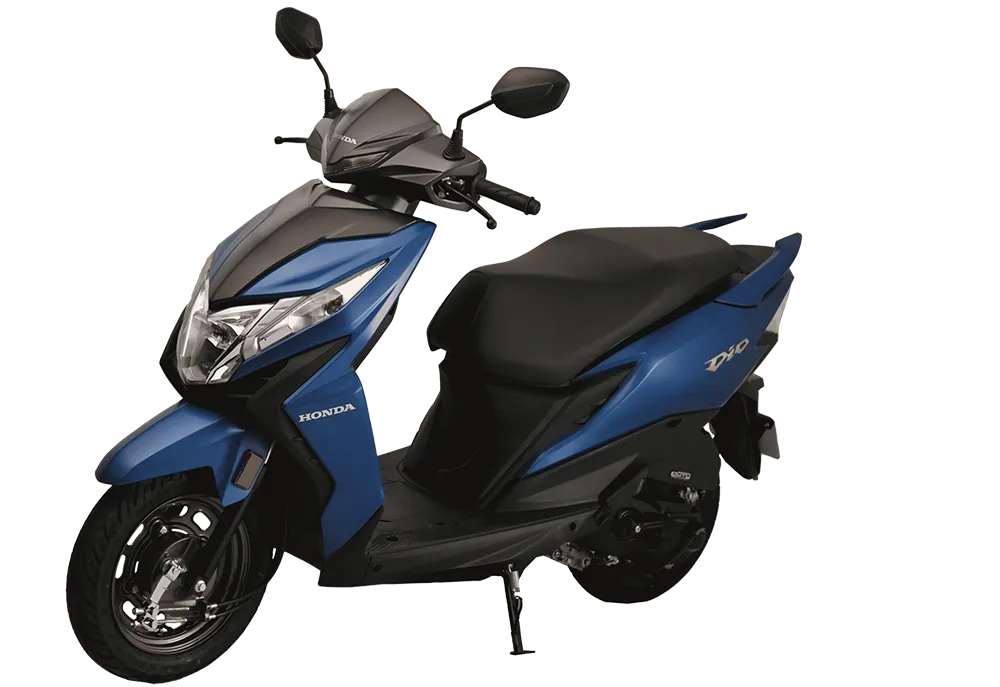
Where it wins clearly: Mileage. In real city riding — traffic stops at every signal, uphill stretches, engine-off moments — I was getting 46 to 48 km/l consistently. For someone filling up every week, that adds up to real money over a year.
The TFT digital meter looks genuinely premium for its price bracket, the USB charging port saves you mid-day panic when your phone dies, and the external fuel filler cap means you don't have to lift the seat at every petrol pump. Small things, but they matter in daily use.
My honest bias: If I had to pick one thing I wish Honda had done differently — it's the brakes. Drum on both ends feels a bit underdone in 2026, especially when you're coming down a wet slope after rain. The CBS helps balance the braking, but a front disc option would have made this scooter almost untouchable at this price. Still, for pure city commuting and value, nothing touches it below Rs. 3 lakh.
2. Hero Xoom 125R FI — Best Value-for-Money 125cc
Price: Rs. 3,09,900
| Spec | Detail |
|---|---|
| Engine | 124.6cc, FI, BS6 Phase 2 |
| Max Power | 9.8 bhp @ 7250 rpm |
| Torque | 10.4 Nm @ 6000 rpm |
| Mileage (real-world) | 50 km/l |
| Top Speed | 95 km/h |
| Kerb Weight | 120 kg |
| Ground Clearance | 164 mm |
| Wheels | 14-inch alloy, both ends |
| Underseat Storage | 19.2 litres |
| Warranty | 5 years / 50,000 km |
I'll be straight: I wasn't expecting much from the Xoom when I first sat on it. Hero's scooter reputation in Nepal has always been a little cautious — solid, yes, but rarely exciting. The Xoom surprised me.
Those 14-inch wheels are the headline feature, and once you ride it on actual Nepali roads, you understand exactly why they matter. Coming down from Balaju towards Swayambhu, where the road has that stretch with deep tar cracks and surprise potholes, the Xoom just rolls over them. No drama. Other 125cc scooters with smaller wheels would have you gripping the handles tighter; on the Xoom, you barely notice.
The engine produces 9.8 bhp — the highest power-to-price ratio in this list. On an empty morning stretch like the Koteshwor-Tinkune road, it pulls noticeably harder than the Dio or the RayZR, and hitting 80 km/h feels composed rather than stretched. The Bluetooth connectivity and digital LCD console are modern enough without feeling overcomplicated.
What genuinely impressed me was the fuel efficiency despite the power. On a mixed city and highway ride to Bhaktapur and back, I logged just over 50 km/l. For a 125cc scooter making close to 10 bhp, that's very good.
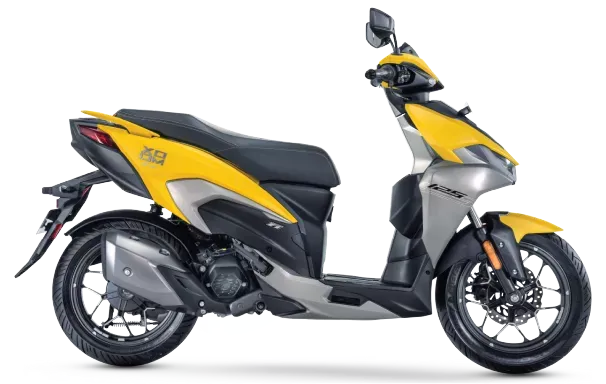
Where it wins clearly: The combination of bigger wheels, more power, more underseat storage (19.2 litres is generous), and a 5-year warranty at this price is hard to beat. If you're regularly riding outside the valley — Dhulikhel, Nagarkot, Pokhara's inner lanes — the wheel size and torque make a noticeable real-world difference.
My honest bias: It's slightly tall. At 777 mm seat height, shorter riders — especially women riders — may find their feet don't plant flat at stops, which gets tiring in dense traffic. Hero could have brought this down a few millimetres without compromising anything. It's not a dealbreaker, but it's worth knowing before you sit on it.
3. Honda Dio 125 DLX BS6 H-Smart — Best Tech-Packed Scooter
Price: Rs. 3,25,900
| Spec | Detail |
|---|---|
| Engine | 123.92cc, FI, BS6 Phase 2B |
| Max Power | 8.19 bhp @ 6250 rpm |
| Torque | 10.5 Nm @ 5000 rpm |
| Mileage (real-world) | 47 km/l |
| Top Speed | 85 km/h |
| Kerb Weight | 104 kg |
| Ground Clearance | 171 mm |
| Brakes | Disc (front) + Drum (rear), CBS |
| Display | 4.2-inch TFT with Bluetooth |
| Warranty | 3 years / 36,000 km |
The moment I turned the key — or rather, didn't turn any key — I knew this was a different category of scooter. The Honda Dio 125 H-Smart uses a smart key system. You approach it, it unlocks. You press the start button, it starts. Seat opens keyless. Fuel lid opens keyless. It's one of those features that sounds unnecessary until you use it in the rain with a bag on your shoulder and realize you never want to dig for a key again.
The 4.2-inch TFT screen is vivid and easy to read in full afternoon sunlight, which is not something every digital console manages. Connected to your phone via Bluetooth, you get call alerts, navigation notifications, and even a Find My Scooter function that's genuinely useful when you've parked somewhere and forgotten which lane.
The 171 mm ground clearance — highest in this list — becomes very noticeable on roads like the ones around Balkhu or the older parts of Lalitpur where speed breakers are built with zero mercy. The front disc brake, paired with CBS, gives you real stopping confidence compared to the Dio 110's all-drum setup.
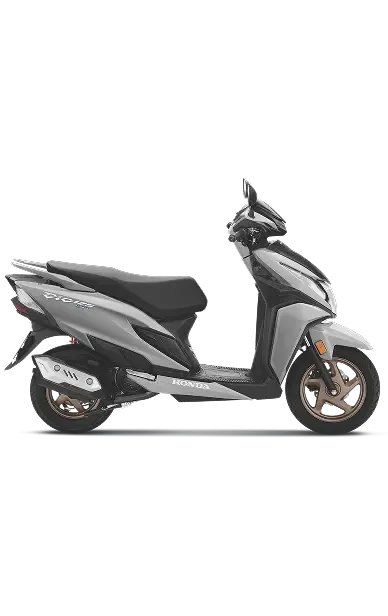
Where it wins clearly: This is the most feature-complete daily commuter in Nepal under Rs. 3.5 lakh. The H-Smart system isn't gimmicky — it's genuinely useful, and Honda's reliability means you won't be chasing warranty claims. The engine, while not the most powerful here, is Honda-smooth: refined, consistent, and honest.
My honest bias: The one thing I find a bit inconsistent is the suspension. On normal tarmac it's comfortable, even plush. But hit a deep pothole at speed and you feel it more than you'd like for a scooter at this price. Honda tuned it for comfort, which is fair for the target audience, but riders who push a bit harder might wish for slightly firmer damping.
4. Yamaha RayZR 125 Street Rally Hybrid BS6 — Best Fuel Efficiency + Hybrid
Price: Rs. 3,32,900 – Rs. 3,34,900
| Spec | Detail |
|---|---|
| Engine | 125cc, FI + Hybrid (SMG), BS6 |
| Max Power | 8.2 PS @ 6500 rpm |
| Torque | 10.3 Nm @ 5000 rpm |
| Top Speed | 91 km/h |
| Mileage (ARAI) | 71.33 km/l |
| Kerb Weight | 99 kg |
| Ground Clearance | 145 mm |
| Underseat Storage | 21 litres |
| Brakes | Disc (front) + Drum (rear), UBS |
| Fuel Tank | 5.2 litres |
Nepal's first hybrid scooter. That title isn't just marketing — the Yamaha RayZR Street Rally Hybrid genuinely does something none of the others on this list do.
The SMG (Smart Motor Generator) acts as a silent electric motor during low-speed starts. So when you're crawling through the Kalimati intersection at 8:15 AM and you've stopped and started fifteen times in ten minutes, the engine actually cuts off at idle — and restarts silently, smoothly, just by twisting the throttle. In the kind of stop-go riding that defines Kathmandu traffic, this system is doing real work.
The fuel efficiency reflects it. ARAI claims 71 km/l, which is ambitious, but even in real Nepal conditions — mixed city and moderate highway — I was seeing figures in the high 50s to low 60s. For reference, that's 10 to 15 km/l better than similarly powered non-hybrid scooters. Over a full year of daily riding, that gap translates to thousands of rupees saved.
The Street Rally version comes with a metal plate on the front apron, brush guards on the handlebar, and block-pattern rear tyres that look built for action. It's not just a commuter pretending to be sporty — it has genuine character. The lightest scooter here at 99 kg, it also handles beautifully in tight turns.
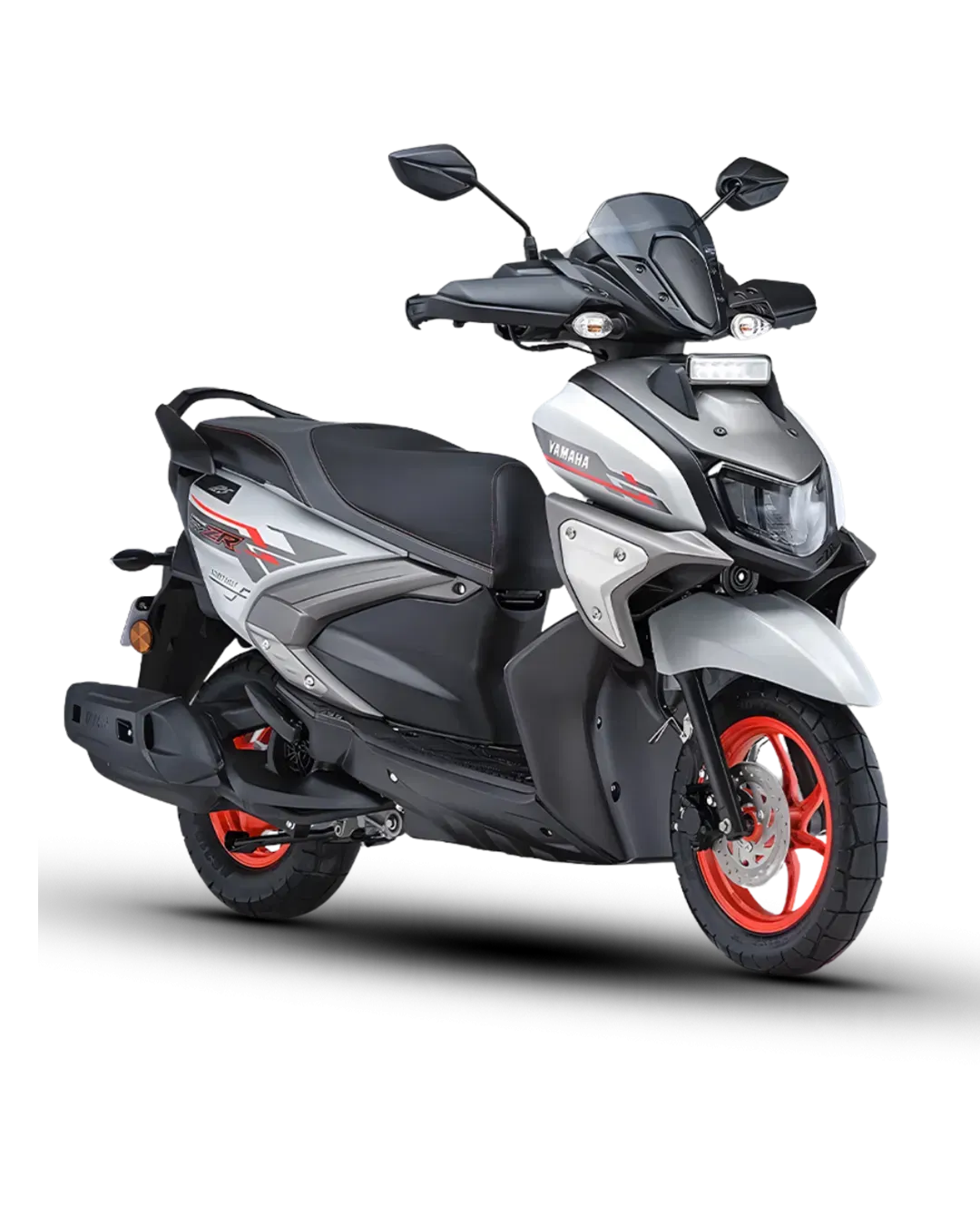
Where it wins clearly: Pure efficiency. If fuel cost matters to you — and with petrol prices in Nepal, it should — the hybrid system's real-world advantage is hard to dismiss. The 21-litre underseat storage is also the largest here, which sounds minor until you start carrying groceries, bags, and helmets in it daily.
My honest bias: The ground clearance of 145 mm is the lowest of the five. Kathmandu's roads are unpredictable — around Balkhu bridge, the underpass near Tripureshwor, or literally any road in older Bhaktapur. I scraped the bottom of the RayZR twice in places where I wouldn't have on the Dio 125 or the Xoom. If your daily route involves rough patches or aggressive speed breakers, keep this in mind.
5. TVS NTorq Race XP Red — Best Performance Scooter
Price: Rs. 3,31,900
| Spec | Detail |
|---|---|
| Engine | 124.8cc, 3-valve, FI, Air-cooled |
| Max Power | 10.2 PS @ 7000 rpm |
| Torque | 10.8 Nm @ 5500 rpm |
| Top Speed | 98 km/h |
| 0–60 km/h | 8.6 seconds |
| Kerb Weight | 116 kg |
| Ground Clearance | 155 mm |
| Brakes | Disc 220mm (front) + Drum (rear), SBT |
| Fuel Tank | 5.8 litres |
| Display | Full digital, 60 features, Bluetooth |
I need to talk about the NTorq XP Red with the same energy you feel when you first ride it — because that's the only honest way to describe it.
When I twisted the throttle fully from a standing start at a red light near Jadibuti, my first instinct was to laugh. Not because something went wrong — because something went very right. 10.2 PS and a 3-valve engine doing 0 to 60 in 8.6 seconds doesn't sound earth-shattering on paper, but in the context of a 125cc scooter in Nepal traffic, it feels aggressive in the best possible way. You pull ahead before other scooters even figure out the signal changed.
The Race XP has dual riding modes — Street and Race. Street mode is your normal, city-friendly setup. Switch to Race mode and the throttle response sharpens noticeably. It's not just a cosmetic difference; the scooter genuinely feels quicker off the line and more eager to rev. TVS built a lap timer into it, which is clearly inspired by motorsport and equally clearly aimed at young riders who treat the Kathmandu ring road as their personal circuit on Sunday mornings.
The SmartXConnect system with voice assist is something different from everything else here. Saying commands to your scooter still feels slightly surreal, but the call alerts, navigation assist, and missed call notifications all work reliably when paired to a phone. The full digital console with 60 listed features is possibly the most comprehensive instrument cluster on any scooter at this price point in Nepal.
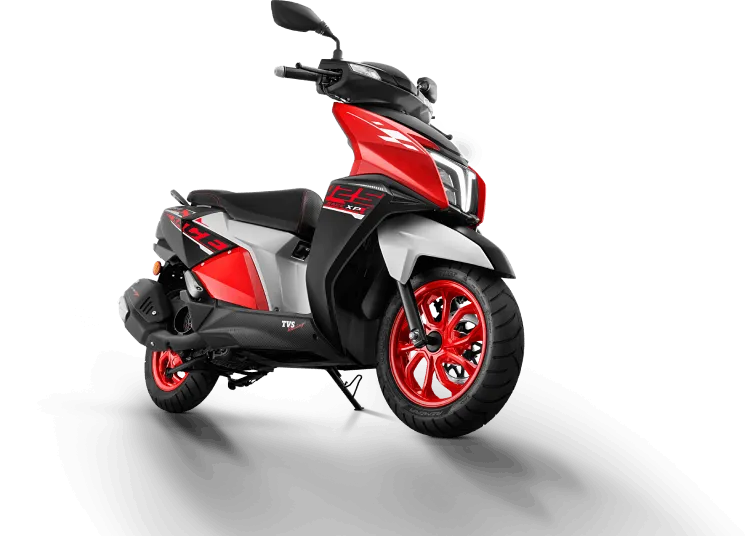
Where it wins clearly: Performance, pure and simple. No other scooter under Rs. 3.5 lakh in Nepal produces 10.2 PS. If you ride the Pokhara lakeside road, if you enjoy the empty morning stretch on the ring road, if you just want to arrive somewhere with a grin on your face — this is the one.
My honest bias: Fuel efficiency is the NTorq's weakest point. In aggressive city riding, you'll see mileage around 38 to 42 km/l. That's noticeably lower than everything else here. The 5.8-litre tank partially compensates, but the running cost is real. If you're doing 30 km a day and petrol is already stretching your budget, factor this in. The XP Red is also available in a single colour — Red — which is bold, beautiful, and completely inflexible if that's not your preference.
Quick Comparison Table
| Scooter | Price (Rs.) | Power | Real Mileage | Segment |
|---|---|---|---|---|
| Honda Dio 110 DLX BS6 | 2,72,900 | 7.75 bhp | ~48 km/l | Best budget |
| Hero Xoom 125R FI | 3,09,900 | 9.8 bhp | ~50 km/l | Best value |
| Honda Dio 125 H-Smart | 3,25,900 | 8.19 bhp | ~47 km/l | Best tech |
| Yamaha RayZR SR Hybrid | 3,32,900 | 8.2 PS | ~58–62 km/l | Best efficiency |
| TVS NTorq Race XP Red | 3,31,900 | 10.2 PS | ~40 km/l | Best performance |
So Which One Should You Actually Buy?
Here's what I'd tell a friend standing in that Dillibazar showroom:
If your budget is tight and you want reliability above everything else — Honda Dio 110. Zero debate.
If you want the most scooter for your money in the 125cc range — Hero Xoom 125R FI. The 14-inch wheels and 5-year warranty alone justify the extra over the Dio 110.
If you commute daily in Kathmandu, want modern tech, and hate fumbling with keys — Honda Dio 125 H-Smart. The H-Smart system is genuinely life-improving and Honda's service network means you'll never be stranded.
If petrol costs keep you up at night, or you care about emissions — Yamaha RayZR Hybrid. The fuel savings over two years will more than offset the higher purchase price.
If you want performance and you're willing to pay slightly more at the pump for it — TVS NTorq Race XP. No scooter in Nepal gives you this much fun per rupee in this segment.
All five are available across major cities — Kathmandu, Pokhara, Chitwan, Biratnagar, Butwal. Book a test ride before you commit. Your route, your daily distance, and your body shape on the seat matter more than any spec sheet.
Good luck, and may your new scooter start first twist every cold morning.
Note: Prices updated April 2026. Prices may vary slightly by showroom and region. Always confirm with your nearest authorized dealer before purchase.
About The Author
Prabin Bhusal
Automotive Editor & Reviewer


