.webp)

Prabin Bhusal
Automotive Lead
toc Table of Contents expand_more
Let me be straight with you — I was one of those people who kept saying "EV haru Nepal ma practical hudaina" for the longest time. Hill road, load shedding ko fear, range anxiety... the list of excuses was endless. But then I actually rode one. And then another. And another.
I spent a few weeks testing different EVs across Kathmandu, from the flat stretch of Balkhu all the way out to Dakshinkali — uphill, downhill, pothole-ridden side roads and all. If a scooter can survive that route without drama, it can survive anywhere in Nepal.
So here's my honest, no-marketing-fluff list of the top 5 electric scooters you should seriously consider buying in Nepal right now.
1. Ather 450X — The One That Changes Your Mind
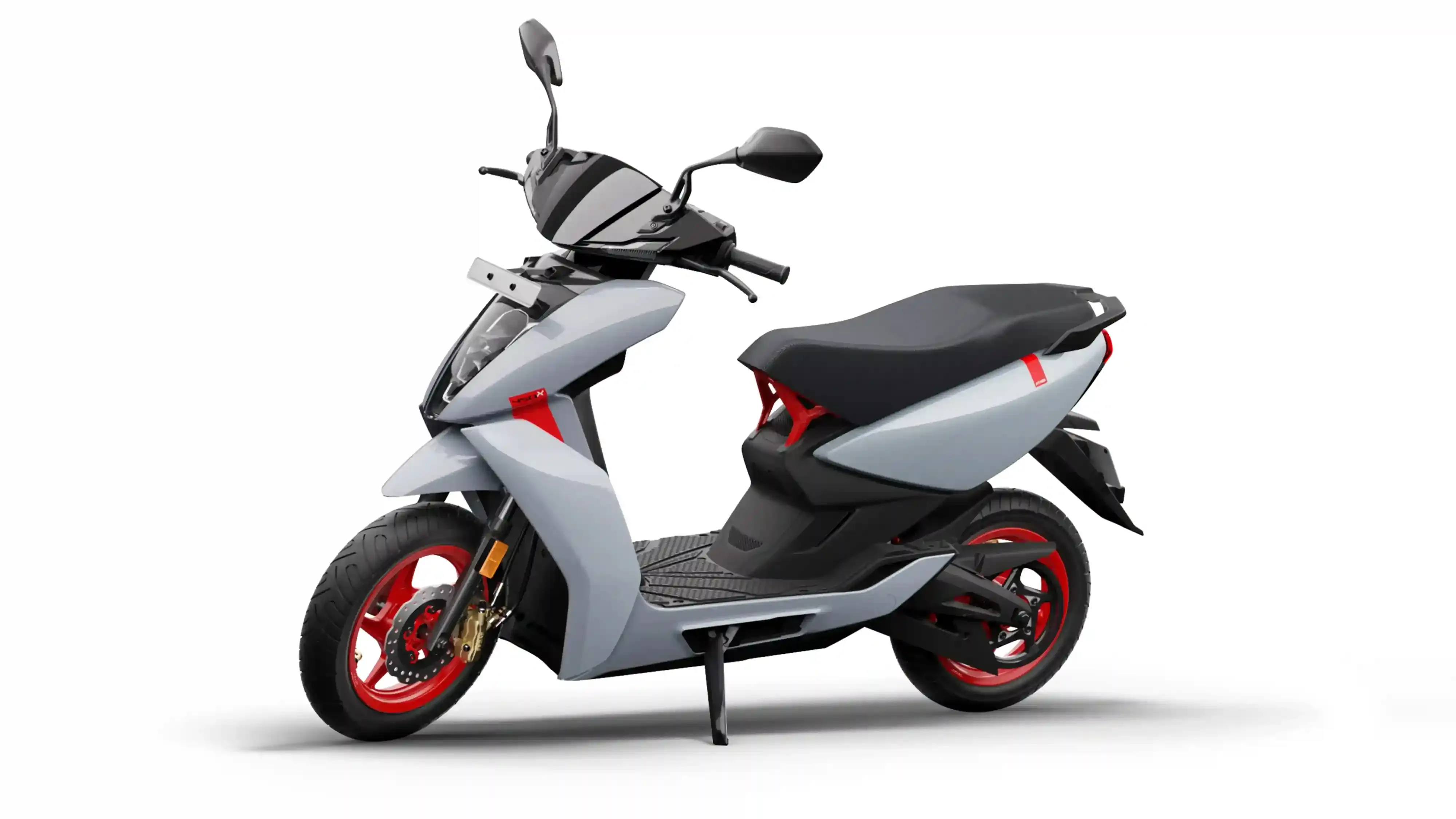
Price: ~Rs. 3,40,000 – 3,65,000 Real-world range: 110–130 km
If someone asked me to pick just one EV scooter in Nepal and be done with it, I'd say the Ather 450X. No long thought needed.
I tested this one on the Balkhu to Dakshinkali road — which, if you've ridden it, you know is not kind to underpowered scooters. Steep climbs, loose gravel patches, and traffic near Thankot junction. The 450X handled all of it without breaking a sweat. The acceleration is instant — you twist the throttle and it just goes. No lag, no hesitation.
The touchscreen display is genuinely useful, not just a gimmick. Navigation, ride stats, battery status — it's all there and actually readable in direct sunlight, which is a bigger deal than it sounds.
What I really liked? The multiple ride modes. In Eco mode, the range extends nicely for longer days. Switch to Sport and it becomes a different beast altogether — great for when you're late to office and Kathmandu's ring road feels like it's working against you.
Bottom line: Best performance in this price range. If you ride aggressively or have hilly roads in your daily commute, this is your scooter.
2. TVS iQube — The Smart Choice for the Practical Rider
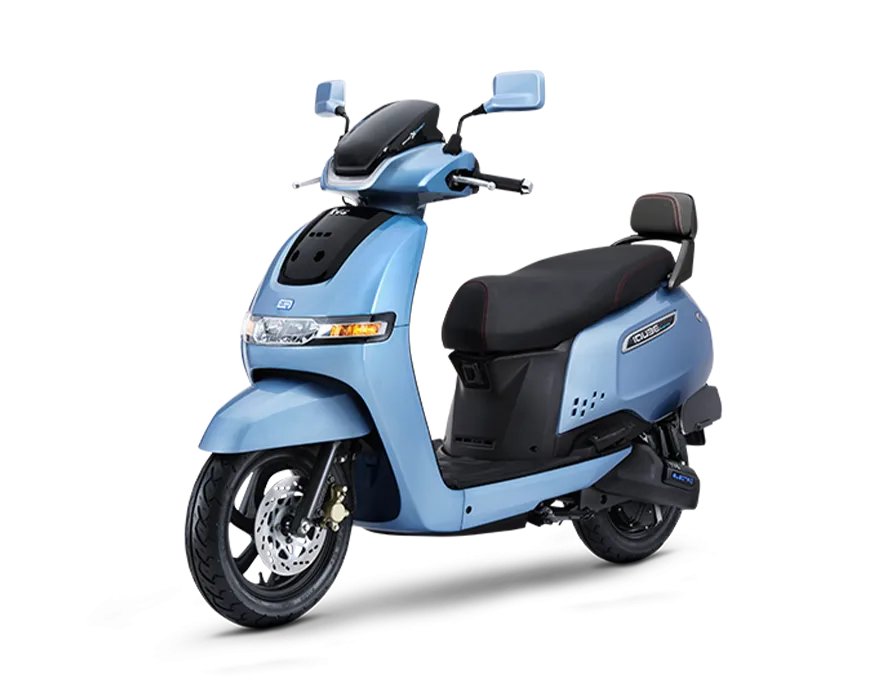
Price: ~Rs. 2,17,000 – 3,39,000 Real-world range: 75–100 km
The iQube doesn't try to be flashy. It tries to be useful. And honestly? It succeeds.
What makes it stand out in Nepal is the sheer flexibility — three variants at three price points. The base 2.2 kWh model starts at just Rs. 2.17 lakh, which makes it one of the most accessible quality EVs available right now. But it doesn't feel "cheap." The build quality is solid, the ride is smooth, and the feature set is impressive even on the base model.
The SmartXonnect app integration is genuinely well-done. You get navigation, real-time range updates, ride history, and even geo-fencing — useful if family members are using the scooter. The TFT display is crisp and the reverse mode is a quiet but very practical addition for tight parking situations (anyone who's tried turning a scooter around in a typical Kathmandu parking area will appreciate this).
TVS also has a strong dealership and service network through Jagdamba Motors, which matters a lot once the warranty period is over. Spare parts availability, service turnaround — these are things Nepali riders genuinely have to think about.
One more thing: iQube is the only scooter in Nepal right now offering a 5-year warranty on the battery, motor, and MCU. That's a big deal when you're spending a few lakhs on a vehicle.
Bottom line: Best value-for-money EV in Nepal, especially if you want smart features without pushing your budget to the limit.
3. Yadea Velax — The Underdog You Should Be Paying Attention To
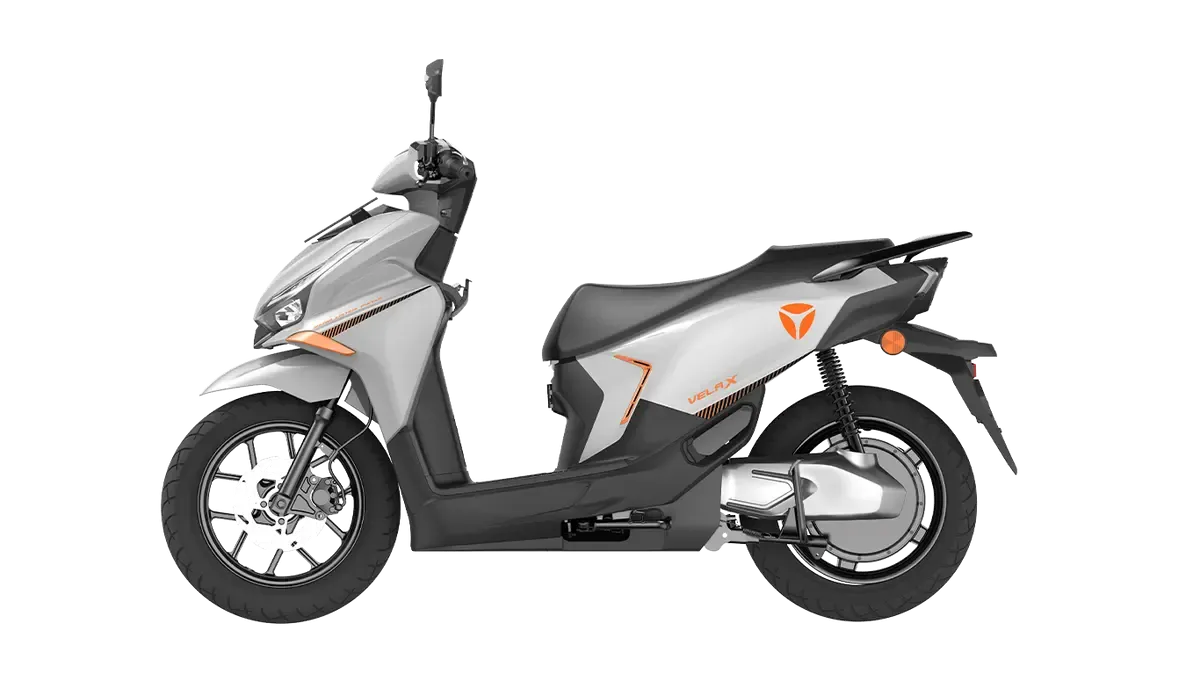
Price: ~Rs. 2,85,000 onwards Real-world range: 100–140 km (variant dependent)
Nobody was really talking about the Yadea Velax six months ago. Now? Riders who've actually tried it can't stop recommending it. That kind of word-of-mouth doesn't happen by accident.
The Velax comes in three variants — Fast Charging, H (High Performance), and U (Ultra Performance) — and the specs are honestly surprising for the price. The top-end U variant pushes a 4900W motor with up to 140 km of real-world range and an 80 km/h top speed. Even the base Fast Charging model does 100+ km and has something most scooters at this price don't: 80% charge in just 20 minutes. For delivery riders or people who can't afford long charging downtime, that's a genuine game-changer.
What makes the Velax stand out for Nepali roads specifically is the torque — up to 172–176 Nm depending on variant. That's not just a number. That's the difference between struggling up Koteshwor overpass with a pillion and clearing it without even thinking about it. The LFP and Graphene lithium batteries are also more heat and cycle-stable than standard lithium packs, which matters when the scooter is sitting in Kathmandu's afternoon sun daily.
Smart features are all there — Bluetooth unlocking, GPS tracking, OTA updates, cruise control, reverse mode, regenerative braking. It doesn't feel like a budget scooter when you're actually using it. Kuzu Nepal, the authorized distributor, also has 12+ showrooms across the country, so service isn't a concern.
The design is modern and sporty — available in Space Grey, Salt Green, and Cosmic Black. It turns heads without trying to look expensive.
Bottom line: The most feature-packed scooter per rupee in Nepal right now. If you want proper performance without going above 3 lakh, the Velax deserves serious consideration.
4. Ather Rizta — The Family Scooter Done Right
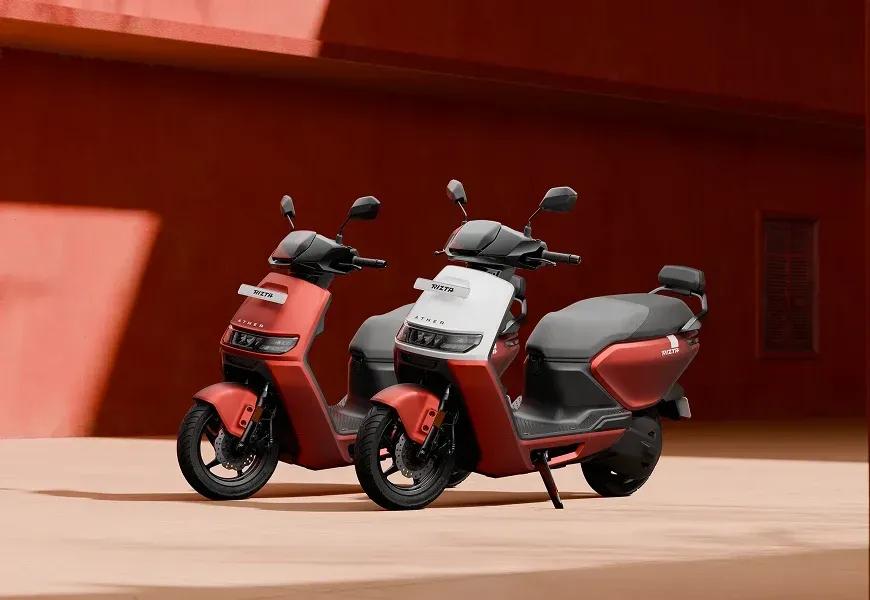
Price: ~Rs. 3,83,500 Real-world range: 120–130 km
The Rizta is what happens when Ather decides to build a scooter for the whole family rather than just the performance enthusiast. Longer seat, better stability, more storage — it's clearly designed for riders who have a pillion passenger most of the time or need to carry more than just themselves.
On the Balkhu–Dakshinkali stretch, the Rizta surprised me. Despite being the "comfort" variant of Ather's lineup, it doesn't feel sluggish on climbs. The suspension setup absorbs road imperfections well, and the overall stability at speed is noticeably better than lighter scooters. If you're riding with a partner or family member regularly, that stability matters.
The under-seat storage is large, the touchscreen dashboard is the same quality as the 450X, and the 120–130 km real-world range means you're not going to be anxious on longer days. It's a bit more expensive than the 450X at the base level, but what you're paying for is a more relaxed, practical riding experience.
Bottom line: Best EV for families. If comfort and everyday usability matter more to you than outright performance, the Rizta is the one.
5. Bajaj Chetak Electric — The Old Reliable
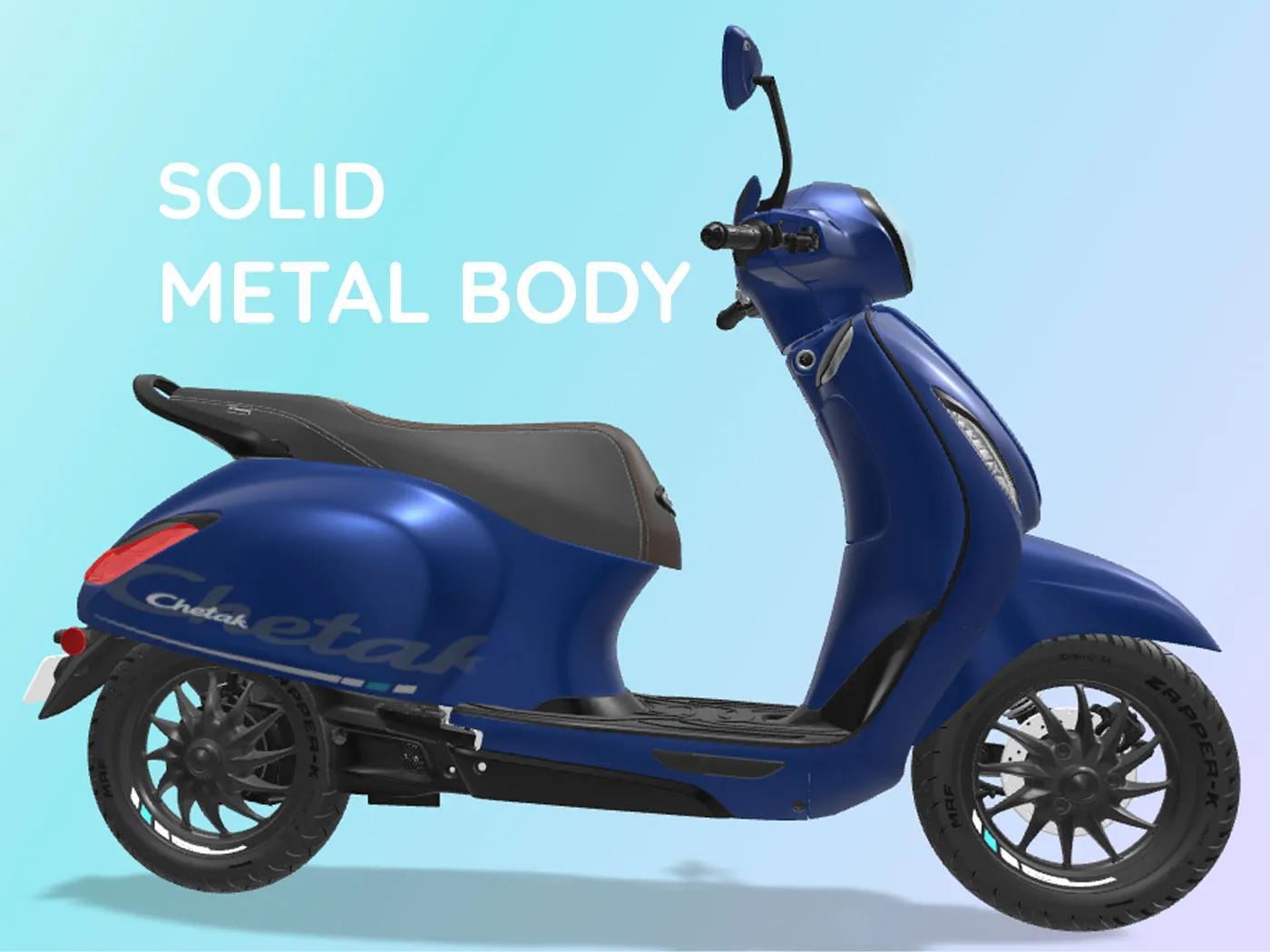
Price: ~Rs. 3,24,900 Real-world range: 85–95 km
The Chetak is the kind of scooter your parents would trust. And I mean that in the best possible way.
Metal body instead of plastic — that alone separates it from most EVs on this list. Drop it once and you'll understand why that matters. The ride quality is smooth and predictable, the braking is confidence-inspiring, and the overall feel is premium in a traditional sense.
Bajaj's dealer network also means servicing won't be a headache. In a market where some EV brands are still figuring out their after-sales support, having a brand like Bajaj behind your scooter is genuinely reassuring.
The range isn't the longest here — 85 to 95 km in real-world conditions — but for most Kathmandu commuters doing 30–40 km daily, that's more than enough for two days between charges. The build quality more than compensates.
Bottom line: If long-term durability and brand trust matter most to you, the Chetak won't let you down.
So Which One Should You Buy?
Here's how I'd break it down simply:
| Scooter | Price (NPR) | Range | Best For |
|---|---|---|---|
| Ather 450X | ~3.40–3.65L | 110–130 km | Performance & Tech |
| TVS iQube | ~2.17–3.39L | 75–100 km | Smart Value |
| Yadea Velax | ~2.85L+ | 100–140 km | Performance per Rupee |
| Ather Rizta | ~3.83L | 120–130 km | Family/Comfort |
| Bajaj Chetak | ~3.25L | 85–95 km | Reliability |
And in plain words:
- Best performance and tech: Ather 450X
- Smart features on a budget: TVS iQube
- Most value for specs: Yadea Velax
- Family riding, comfort first: Ather Rizta
- Durable and trusted brand: Bajaj Chetak
Nepal's EV infrastructure is genuinely improving — charging stations are coming up faster than people realize, and government tax exemptions on EVs mean your total cost of ownership is lower than it looks. The question isn't really whether to switch anymore. It's which one to switch to.
Hopefully this helps you figure that out.
Have you ridden any of these? Drop your experience in the comments — especially if you've taken them on Kathmandu's ring road during rush hour. That's the real test.
About The Author
Prabin Bhusal
Automotive Editor & Reviewer


